Bangladesh Gram Theater Convention

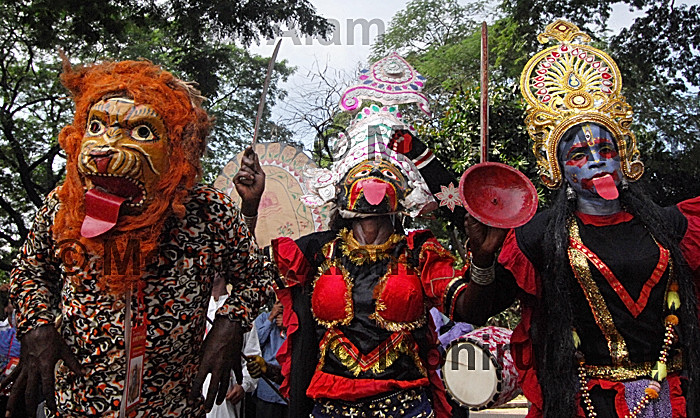
Bangladesh Gram Theater took out colorful procession in the city to celebrate their 6th National Convention 2008 with the slogan “Lalon Amar Praner Spondon” The programme started at the Bangladesh Shilpakala Academy premises. Bangladesh Gram Theater was initiated by the  late  theater icon Selim Al Deen14 Nov/08 Dhaka. Bangladesh. © Monirul Alam   
Bangladesh Gram Theater Convention          

Photo:Monirul Alam

1Nov/08 Khola Kalam Prothom Alo

Recently my NEWS Feature published on Daily Prothom Alo 1Nov/08 Khola Kalam page. Please see the

link on http://www.prothom-alo.com/mcat.news.details.php?nid=MTI1MDYy&mid=NA==

-monir

Study natural light

Without light we can not see anything. Light is very much important of our life.

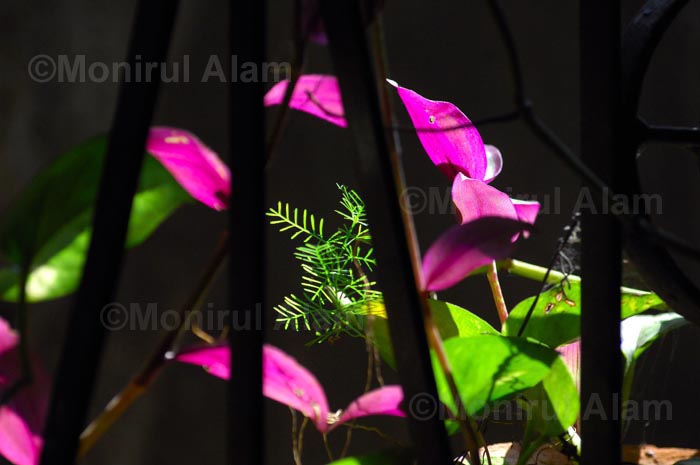
 Learning to see it in all its forms and understand what it will do. After all the word photography literally means “Light Writing” And to learn write with light you must know what it will do your subject and how it will evoke responses from your reader. I influence from natural light most of the time when I taking a picture. One day in the early morning I studied a beautiful light weave and color how its forms and striking on the subject. I see and observed how the light wave is moving within a few minutes. I am sharing with you . . . 


Photo:Monirul Alam


Photo:Monirul Alam


Photo:Monirul Alam   
Durga Puja . . .

Durga Puja
At the end of every year in autumn she returns to her paternal home in Bengal from her husband Shiva’s house in Kailash, a mountain range of the Himalayan’s. Ever year she takes different routs and vehicles to arrive at the plains of Bengla. The vehicle she chooses affects the agriculture and other aspect of Bengalis life. If she is arrives by boat for examples, It result in an increase in agricultural yields and rise of water in the rivers which might ever cause floods. This year she arrives by elephant. Every year Bengali Hindus throughout the world celebrate the five-day Durga festival the greatest and the most colorful festival in their calendar. Dhaka, Bangladesh October 2008 ©Monirul Alam


Photo:Monirul Alam

Migrant Worker

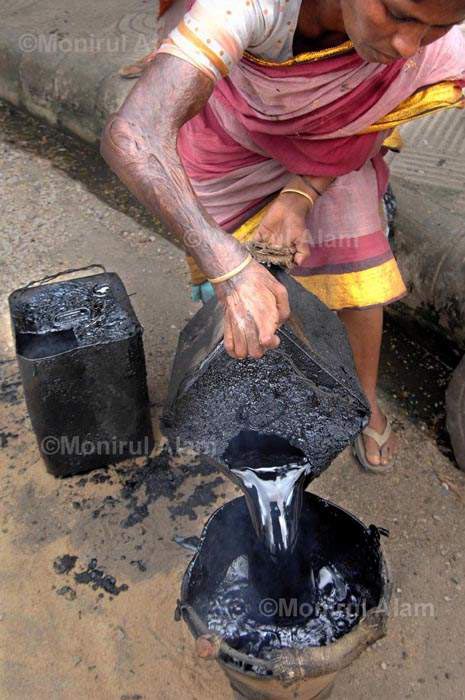
Rukshana works as a migrant labor in Dhaka city. She has two daughters and one son. Her husband was died in 1996 after that she moved Dhaka for finding work. When she worked, suddenly injured by chemicals and burns her right hand in 2005. No one can help at that time. She still works as a construction worker and she is the only earning member of her family. Dhaka Bangladesh September 2008. ©Monirul Alam

Photo:Monirul Alam

Star In Site

Dear all

Please see my Daily Star interview on http://www.thedailystar.net/starinsight/2008/09/02/cl.htm

best regards

Climate Refugee in Bangladesh

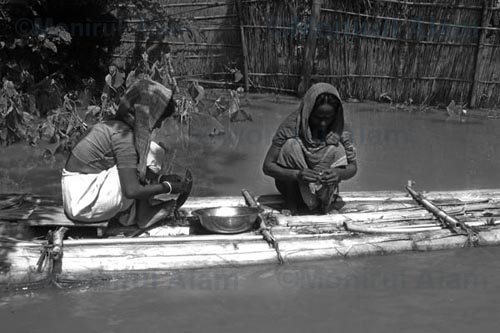
The worst flood affected district in Bangladesh is Sirajgonj, where about 0.7 million people are effected. District Administration authority is starting to give relief, with every person getting 320 grams of rice per head. Sufferings of flood affected people in the country increase due to shortage of food, drinking water and medicines. People become homeless. Especially children and woman suffer much more. This two woman leave on the tree make ferry. They don’t go to relief camp because they don’t have any cloth.  August  2007 Sirajgonj, Bangladesh.

Photo:Monirul Alam

Promise of Tomorrow

Promise of Tomorrow
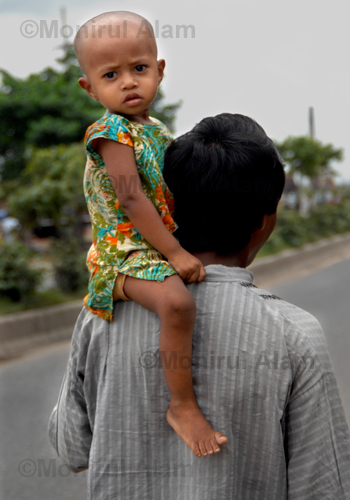
Villager Rouf Ahmed lap his little daughter name Moushumi is going to their house. According to the UNICEF more than 10 milliohm children under five years of age, nearly half of them in the first weeks of life die every year of preventable disease and malnutrition. August 2008 Saver, Bangladesh. ©Monirul Alam  


Photo:Monirul Alam

Education System in Bangladesh

Education System in Bangladesh
In Bangladesh three type of education system is operating like Bangla, English and Madrasa medium. Rural people like to send their children to learn Arabic while a large number of participant of girl child. June 2007 Gazipur Dhaka Bangladesh. ©Monirul Alam


Photo:Monirul Alam

Asia’s Cesarean Phenomenon

Asia’s Cesarean Phenomenon
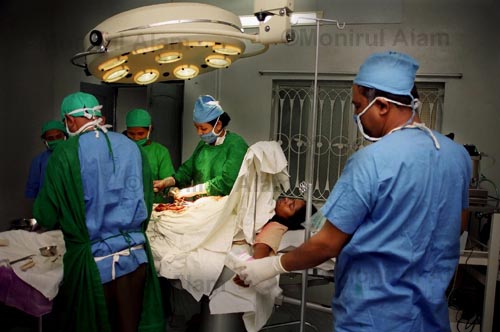
While the World Health Organization recommends a C-section rate of 10-15% of total births in trhe developing world, the figure is often much higher. Despite the risks, large numbers of women are opting for C-sections to avoid birth pain and to control the date of their baby’s arrival. March 2005 Dhaka, Bangladesh. ©Monirul Alam


Photo:Monirul Alam