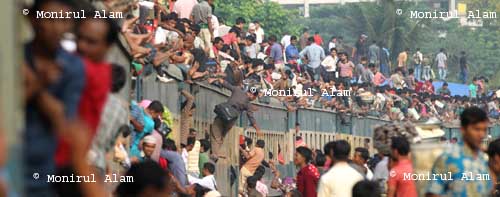
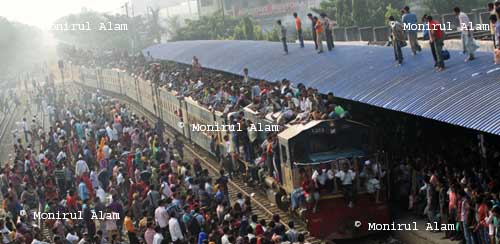
I was their around 6.30 am. on the Dhaka airport train station to cover the people’s train journey on upcoming Eid Holidays. Thousands of home bound people left Dhaka and to go to their village town celebrating Eid with their loved ones. Yes, it wills an amazing to see when train arrives on the station. I stand on the foot over bridge to take photos and observe the whole situation.
At that time one of train passenger came to me and asked, Are you journalist and said , I came here yesterday at 6.00 pm. to go to my home town in Lal Monirhat but my train is not to coming on time and authority said, It will possible to come around at 8.00 or 9.00 am these morning ! I am just waiting for long time and spend 200 tk. for my food; I spent one night on the station platform and fall sick.
I looked him and pay attention his problem but not to find any solution. I think this is our system every Eid holidays home bound people are regularly facing these problem. Atik Hossain work in a garments factory in the Dhaka city, he also said, I don’t have any ticket yet, my train name Rangpur Express, maybe I will try to ride on the train roof, I know it’s a risky journey but I don’t have any other way.
I am really pained at heart to read today’s news paper Eight people died falling off the roof of running trains in Tangail and Bogra district on Friday night and yesterday. But people are not to pay much attention and not to bother about the news. I think people really mad to go their village any way. But the painful news is that every year home bound people take these risks by train, launch and bus journey and is in occurred an accident.
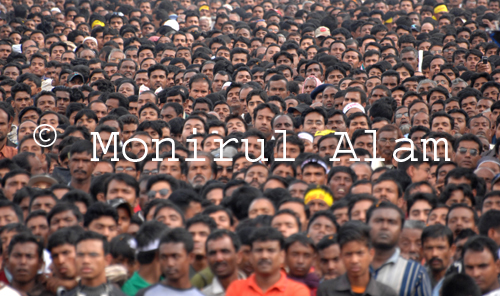
However, when the train arrives in the station, it’s already overcrowded look like a human sea. Within a few minutes people rush on the train and agitate each other to boarding on the train. Finally they are happy to go to their home to take a risky journey on the train roof. I hope to safe their journey and to celebrate the Eid-al-Azha with their loved ones.
04 Oct 2011 Narsindgi: Sacrificial animals stand on the local van named Vatvoti heading to the cattle market in Narshandi District. Bangladesh will celebrate Eid-ul-Azha one of the biggest religious festivals in the country. I took thes picture on the way to Narsindgi District where people buy their sacrificial animals two days remaining Eid-ul-Azha.
Rafiqul has been forced to move 22 times in as many years, a victim of the annual floods that ravage Bangladesh. There are millions like Rafiqul, in Bangladesh and in the future there could be many millions more if scientists’ predictions of rising seas and more intense droughts and storms come true.Climate change touches already every corner of the world and every aspect of people’s lives. As the global temperature increases, its impacts will become even more extreme.The impact of climate change World is already facing food and fuel crises.
World Bank and IMF have sounded a larger alarm push 100 million people in low-income countries deeper into poverty.Bangladesh is a country that stands to be one of the first to suffer from global climate change. As Dr. Atiq Rahman of the Bangladesh Center for Advanced Studies says: “Bangladesh is a resilient country. We have shown the world that we can adapt, that we can confront things, that we are not just passive victims of disasters.”
The IPCC warns of devastating floods, drought, extreme weather, hunger, and disease across the world in decades to come. The Bay of Bengal regularly serves catastrophic cyclones and floods. With few natural resources, bursting cities and poor infrastructure, the small nation is certainly beset with troubles both natural and manmade. But Bangladesh may yet become our best example for how both big and small adoptions can make a difference for people to survive on a warming planet.
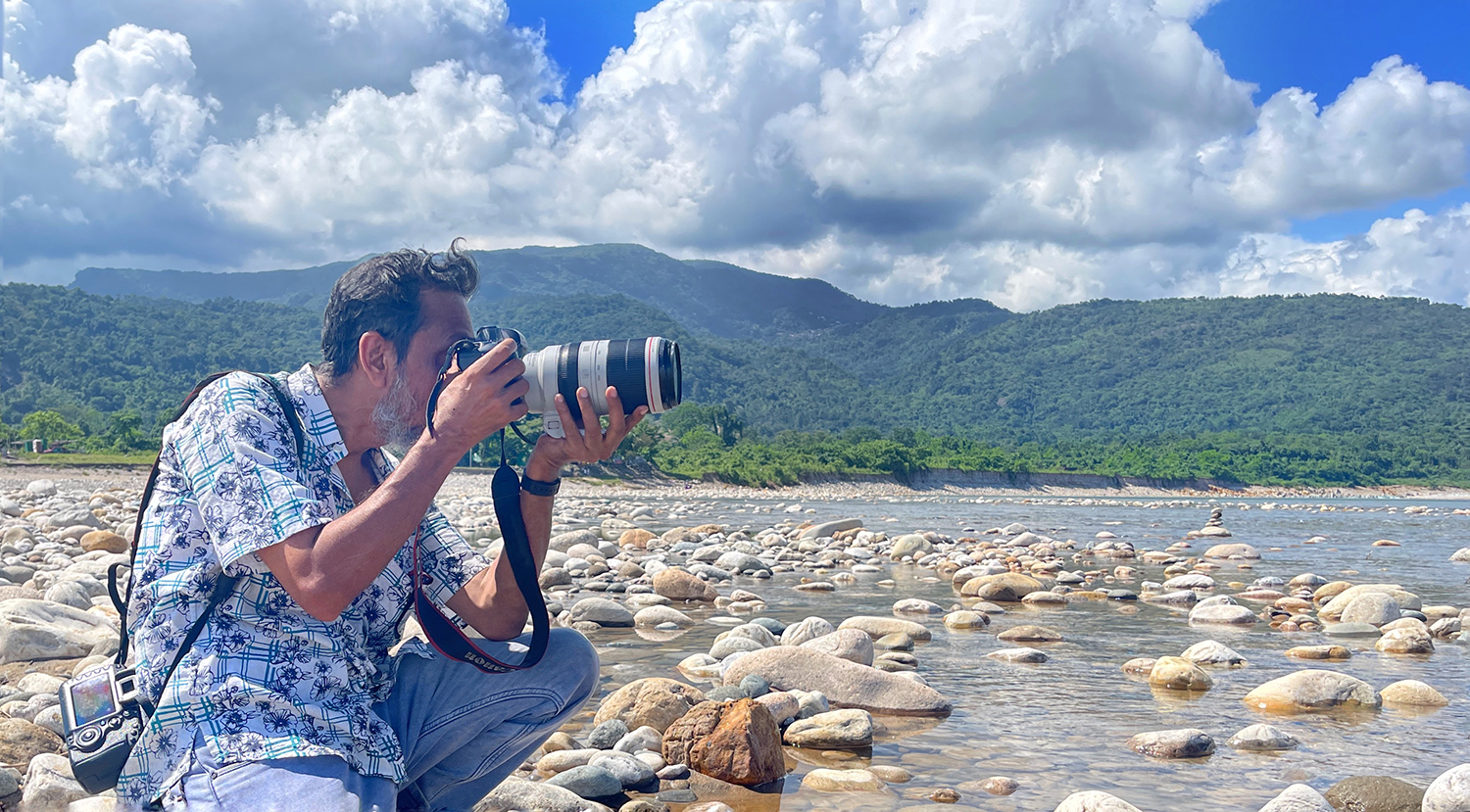
Bangladesh already accelerates it and now a glimpse of everyone’s future.Photojournalist Monirul Alam as an eyewitness ,he covered in his own country , who struggle against nature .
Social injustices, Political crises, Ignoring the nature are the common topic of our daily life. We are leaving in a civilized world, as a member of this large civilized society. Most of the time we failed to fell the rhythm between the thought, words and act, every where there is a conflict . . . monirul alam
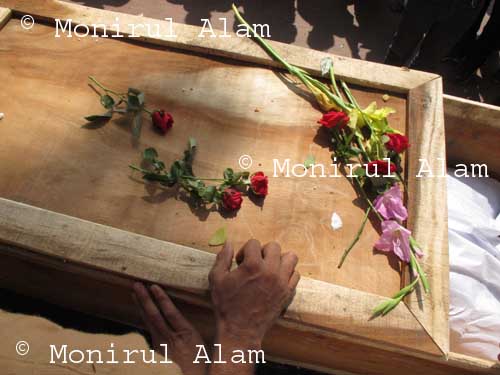
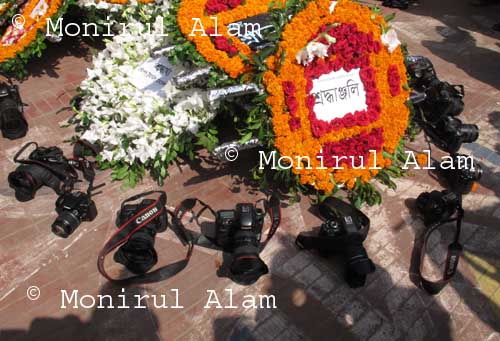
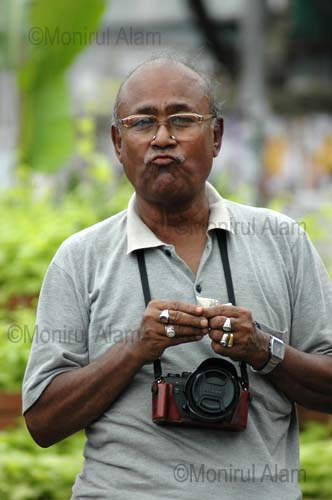
26 Oct. 2011 Dhaka. Bangladesh- Cultural personalities, eminent citizens and his fellow photojournalist paid their last respect to renowned photojournalist at the Central Shaheed Minar premises in the city on 26 Oct 2011.
Renowned photojournalist Rashid Talukder, the first Bangladeshi to win prestigious Pioneer Photographer Award, has passed away at a hospital in the city. He was 72. Talukder died at Square Hospital around 6:30pm on Tuesday while undergoing treatment there, his cousin Sheikh Mohammad Sumon told media. He was admitted to the hospital on Oct 19 following a brain stroke.
Talukder was born on Oct 24, 1939, in Chabbish Pargana, West Bengal, India. He developed interest in photography while he was in school. He began working in the darkroom in 1945 when he was a student of class 8. Talukder joined the Daily Sangbad as a photojournalist in 1962, and has been a press photographer since then, for 46 years. He worked with the Daily Ittefaq for 29 years.
His photographs of the 1971 liberation war are considered invaluable documents. For several decades, he recorded various aspects of Bangladeshi life.
Talukder received several awards and honours at home and abroad. He got a lifetime achievement award at Chobi Mela, an international festival of photography in Dhaka, for his contribution to the field.
His photograph of Bangabandhu Sheikh Mujibur Rahman’s historic speech on March 7, 1971 was nominated for the Encyclopaedia on Southeast Asia, published by Cambridge University, England.
Talukder has been a member of advisory councils of several photographic organisations, including Bangladesh Photographic Society. He is also the founder of the Bangladesh Photo Journalists’ Association.

 MONIRUL ALAM