On the frontline of Climate Change| Bangladesh


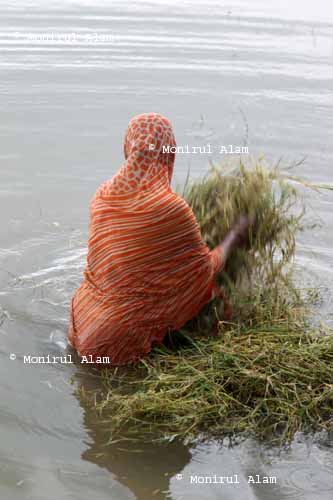
Rafiqul has been forced to move 22 times in as many years, a victim of the annual floods that ravage Bangladesh. There are millions like Rafiqul,  in Bangladesh and in the future there could be many millions more if scientists’ predictions of rising seas and more intense droughts and storms come true.Climate change touches already every corner of the world and every aspect of people’s lives. As the global temperature increases, its impacts will become even more extreme.The impact of climate change World is already facing food and fuel crises.
© Monirul Alam

World Bank and IMF have sounded a larger alarm push 100 million people in low-income countries deeper into poverty.Bangladesh is a country that stands to be one of the first to suffer from global climate change. As Dr. Atiq Rahman of the Bangladesh Center for Advanced Studies says: “Bangladesh is a resilient country. We have shown the world that we can adapt, that we can confront things, that we are not just passive victims of disasters.”

The IPCC warns of devastating floods, drought, extreme weather, hunger, and disease across the world in decades to come. The Bay of Bengal regularly serves catastrophic cyclones and floods. With few natural resources, bursting cities and poor infrastructure, the small nation is certainly beset with troubles both natural and manmade. But Bangladesh may yet become our best example for how both big and small adoptions can make a difference for people to survive on a warming planet.

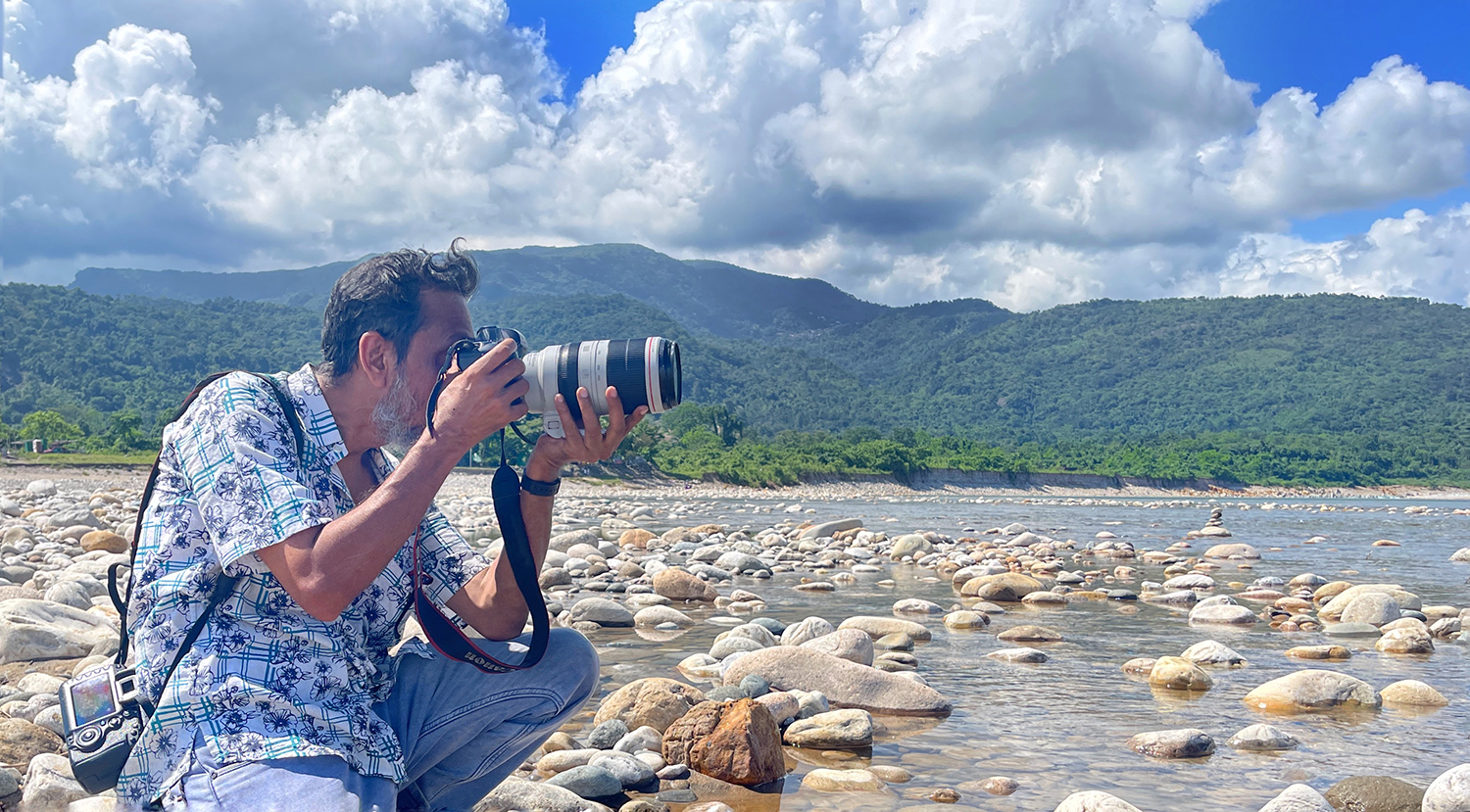
 Bangladesh already accelerates it and now a glimpse of everyone’s future.Photojournalist Monirul Alam  as an eyewitness ,he covered in his own country , who struggle against nature .

http://monirul.photoshelter.com/


Bangla Rights | Publication

No one can help me, and I don’t have any other way to live except through begging. I live on the street and everyday earn Taka 30 to 40 and I am taking drugs as I am frustrated by life.”

-Zahid, a street beggar and drug user

A lame man walks the streets at night. He is Zahid, who has lost the use of his left leg as a result of a childhood illness. He came to Dhaka from his village in Bagura, in the northern part of Bangladesh and started begging to survive.

No one can help me, and I don’t have any other way to live except through begging. I live on the street and everyday earn Taka 30 to 40 and I am taking drugs, as I am frustrated with life. Sometimes the police pick me up from the street and release me on the outskirts of Dhaka.  We suffer a lot but no one can help us get a good job or rehabilitate us.”

Like Zahid, there are many people, especially women and girls whose human rights are violated daily.  These can include physical, sexual, psychological and economic abuse, and they cut across boundaries of age, race, culture, wealth and geography.

Drug abuse in Bangladesh is a national issue of concern as it directly impacts the economy and society. There are millions of drug-addicted people in Bangladesh and most of them are young, between the ages of 18 and 30 and they are from all strata of society.  The country as a whole is deemed by the UN to be “low-risk.” However, the disease is spreading at an alarming rate among the intravenous drug addicts who reuse dirty needles in the urban slums of the capital. The first HIV positive patient in the country was identified in 1989. According to the Health Ministry statistics for last year 123 people died of AIDS, 365 others got infected and 1207 were found HIV positive. According to UNAIDS statistics, the number of HIV-positive drug users more than doubled between 2001 and 2005. Health experts warn that the risk of an epidemic is increased by that fact that many of the addicts also admit paying for sex and only 10 percent say they always use a condom.

Most of the addicts are young, homeless and unemployed. Some of them don’t know anything about the diseases they have. Frustrated with lives they have turned to drugs. When you talk to them you realize they are just waiting for death because they have nothing else to do.

Artist statement

“A deadly game” is my self-photography project. My work started many years ago when I got to know about HIV/AIDS. As a photojournalist, I find the street drug users suffer more and face more problems as they do not know their basic rights.  At the same time they don’t know enough about diseases to be concerned about them.

My main focus is on the street drug user is to show their actual condition in a humane way . At the same time, I also would like our society to see the drug users and to respect their human rights through my photo story.

Note: Recently Bangladesh Human Rights Networks, banglarights.net published my Photo Story, A Deadly Game to their on line publication. Please visit on the following link pages

Link: http://banglarights.net/a-deadly-game-moniul-alam.html