Sensibility Objectified by Sarbari Roy

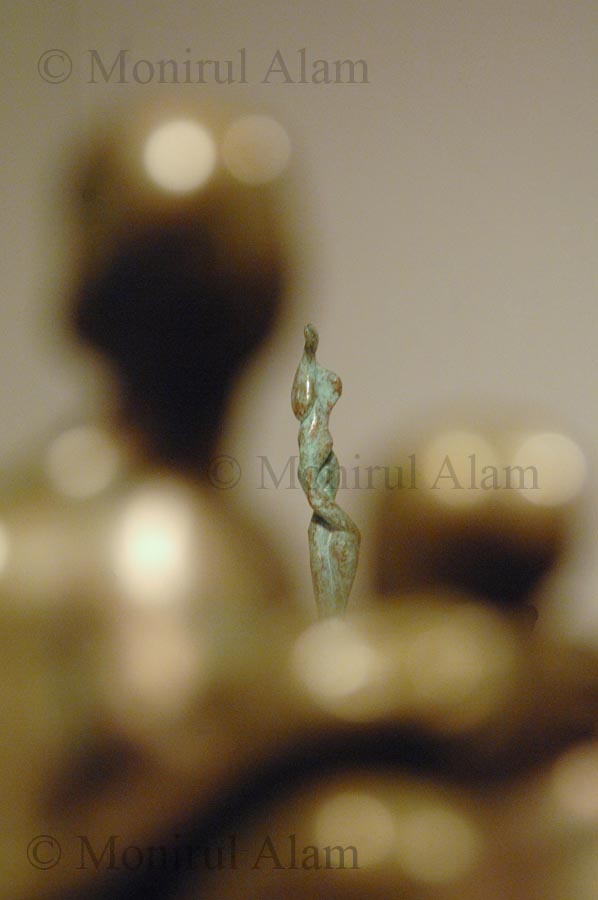
Indian renowned sculptor Sarbari Roy Choudhury’s exhibition title Sensibility Objectified is recently held at Bengal Gallery of Fine Arts.  With a sculptural sensibility shaped by his early contacts with the masters of modern sculpture in the West, Sarbari Roy Choudhury is essentially a modeler in the best modernist tradition for which sculpture is the magical act of turning clay into flesh. And in this he is almost without a parallel among his contemporaries. Dhaka June 2009. © Monirul Alam

Sensibility Objectified by Sarbari Roy

Photo:Monirul Alam

Monsoon Rain

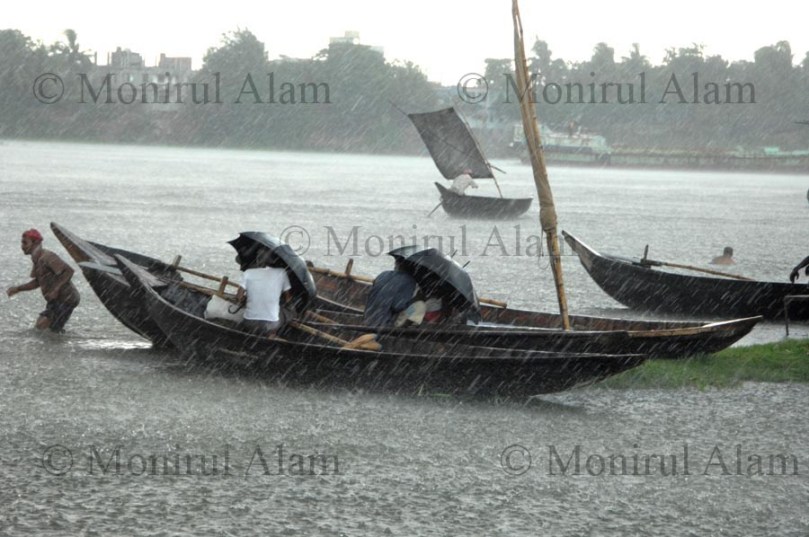
The first monsoon rain is falling on the Buriganga River this year. The boat man taking shelter under the umbrella and observe the rain. Monsoon is the wind system that dominates the climate of South Asia and the area around the Indian Ocean. Washpur Ghat, Dhaka. June 2009. © Monirul Alam

Monsoon Rain

Photo:Monirul Alam

Trains Collide head-on

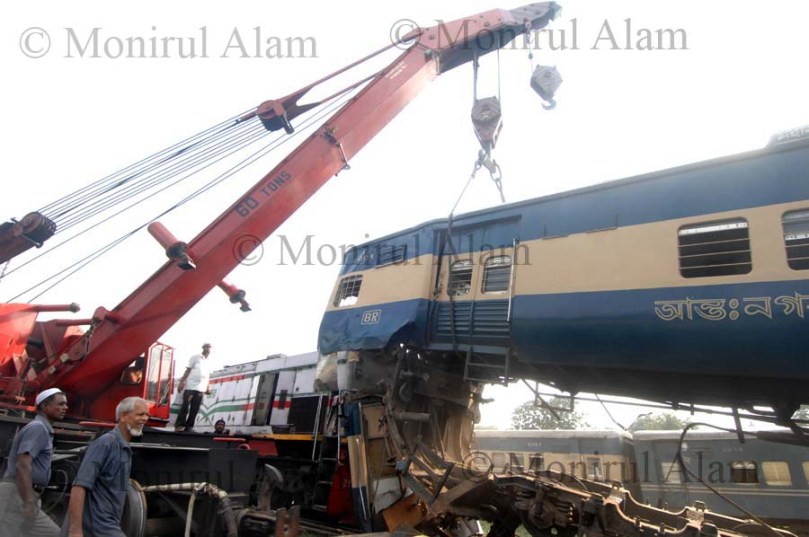
A rescue team removing the damage bogies of the train. Two express trains collide head-on just the outside Kamalapure Railway station leaving a man dead and six others injured. Station sources said when Mymensing-bound Isakhan express train was departing the station around 2.40pm; Mohanagar intercity train from Chittagong was approaching the station on the same lines. June 2009 Dhaka Bangladesh. © Monirul Alam

Trains Collide head-on

Photo:Monirul Alam

River Pollution

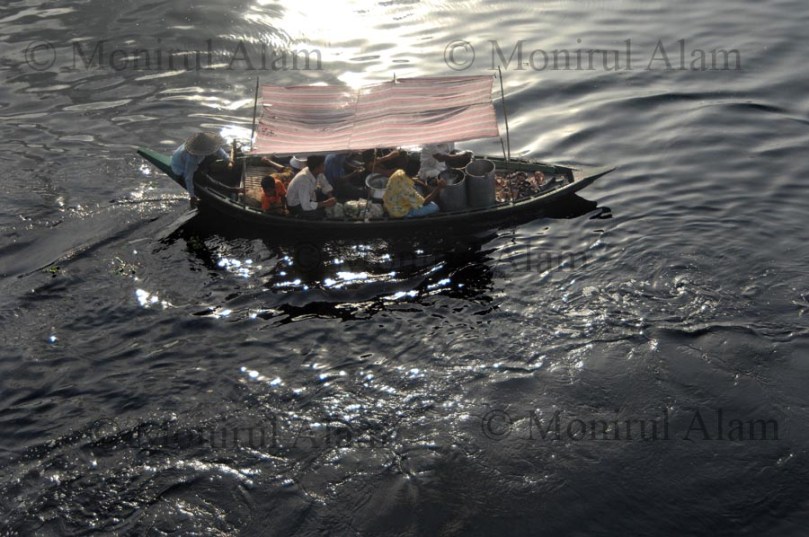
Millions of cubic meters of sewage and industrial and house hold waste fall into the Balu River. Residents including children of Trimohoni area have to cross the dangerously polluted Balu river by the boat to go about their daily chores, as boats are the only transports connection them with the rest of the world. Dhaka June 2009 © Monirul Alam
River Pollution
Photo:Monirul Alam

Industrial Waste

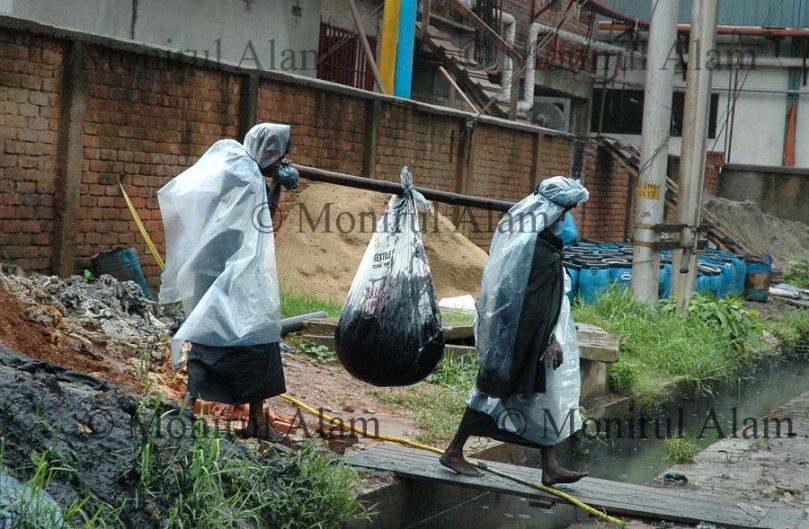
Labors collect industrial waste from Savar (Dhaka Export Processing Zone) DEPZ. Everyday 1.3 million Cubic meters of industrial waste discharged . These industries directly discharge chemicals like ammonia, acids, chloride, arsenic, sulfur, chlorine, benzene, and metals like chromium, aluminum, copper, lead, zinc, silver, etc. Industrial waste makes up 60 percent of total pollution. June 2006 Savar, Dhaka. © Monirul Alam

Industrial Waste
Photo:Monirul Alam

Domestic child Labour

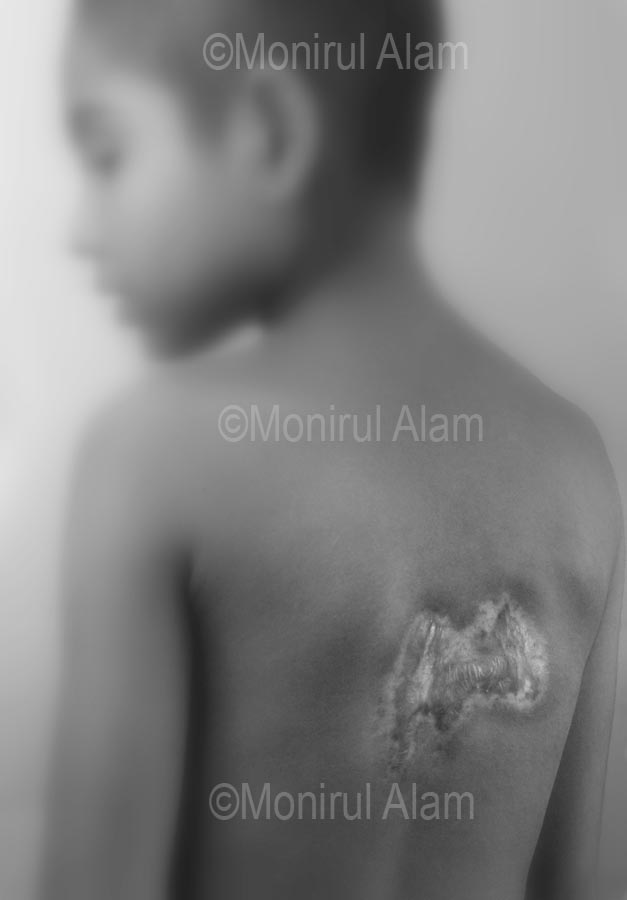
Shapla, 8 came to the capital Dhaka with her neighbor in search of work. She found a job as a domestic help with a family in Dhanmondi area. A few days later, she tortured by her householder. Shapla said most of the time my owner beat me, I never play with their child. One day my owner burn my back side heated cooking handle.

Globally, at least 10 million children are trapped in domestic labor jobs where they work long hours for little pay and often face abuses. Total number of child domestic workers in Bangladesh is not available. Some NGOs estimate that there are approximately two million children engaged in domestic work in Bangladesh. April 2009 Dhaka
Domestic child Labour
Photo:Monirul Alam

Street Children

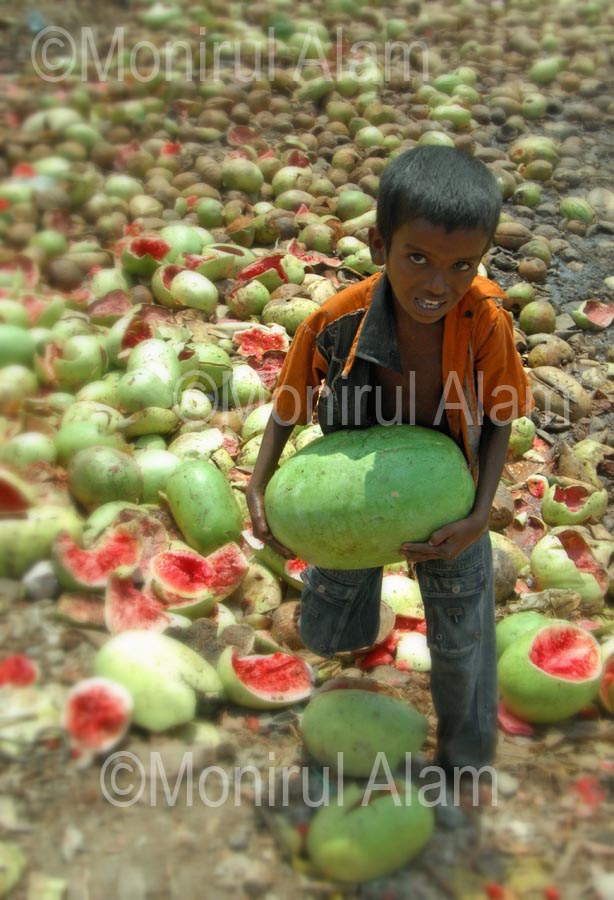
Nakib, taken a thrown piece of water-melon from the bank of Buriganga and this may be the only food for the day. Ten years Nakib said, One day I came here by launch from my village Barishal district (South part of Bangladesh) I never go back to my village because my father remarriage and my step-mother beat me most of the time. Many street children wander around by the bank of Buriganga. They look for a crumb of bread from launch terminal or fruit market. These homeless living at the edge of poverty are sons of this country too.

These children survive by picking things from the street, dustbins and other places. Street children have no parents. Actually they live on the street and die on it. Some of them have parents but have no contacts with them. Factors forcing children to the street are mainly poverty, broken family, running away from family, and sexual abuse. Nobody takes care of vagrant children. They live at stations, bus terminals, office premises and in parks, street sides or under the open sky. April 2009 Dhaka, Bangladesh
Street Children
Photo:Monirul Alam

Light & Rain

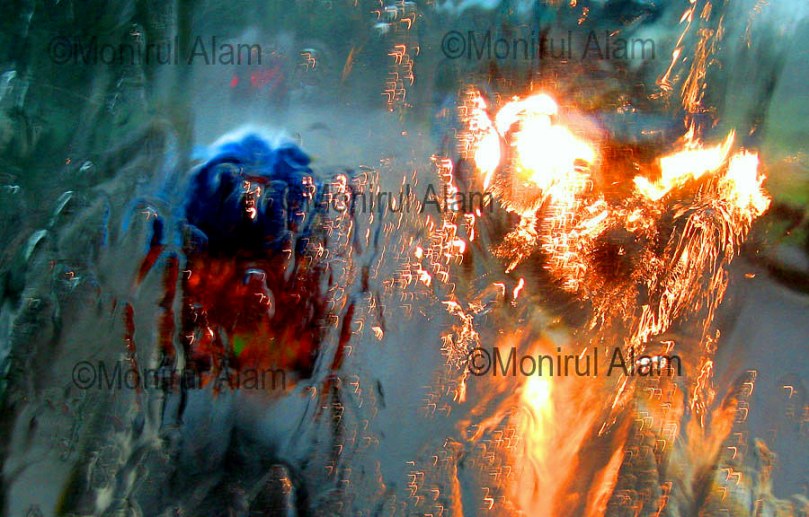
One of the renowned photographers from Magnum Raghu Rai said, sometimes picture comes from the Supernatural being . . . you just hang around. A year ago I realize what does it means. I take this picture few years ago and I knew too that I might never have it again. August 2006 Manikgonj, Dhaka, Bangladesh

Light & Rain . . .
Photo:Monirul Alam

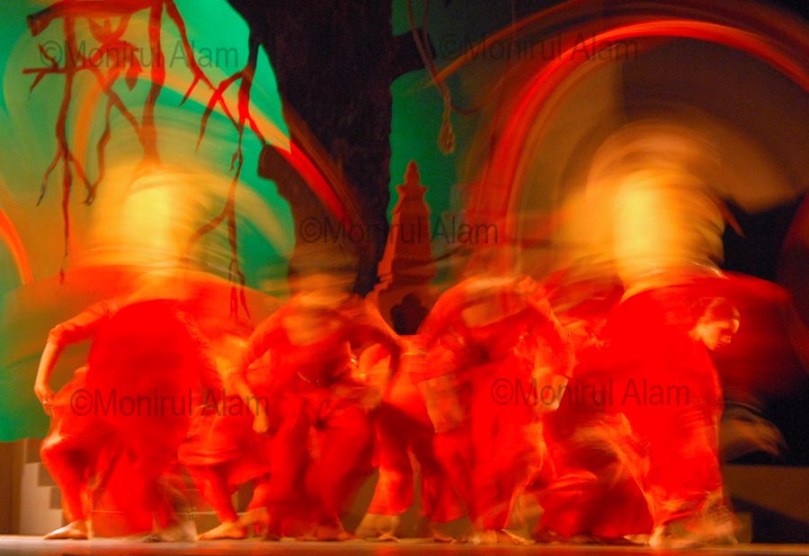
Classical Dance

Dance one of the oldest art forms of the world. Anthropologists believe that it started with the earliest human beings, developing as part of magical or religious ceremonies. Classical Dance in the South-Asian context refers to Kathak, Bharatnatyam, Kathakali, Odissi and Manipuri dances. These ancient Indian dances, representing particular styles, are associated with different regions. Thus, Kathak is associated with northern India, Bharatnatyam and Kathakali with southern India, and Odissi and Manipuri with eastern India. However, most dances are performed all over India and Bangladesh. Bengali artistes learned classical dancing from teachers coming from south India, Madhya Pradesh and Manipur. January 2009 Dhaka Bangladesh
Classical Dance
Photo:Monirul Alam

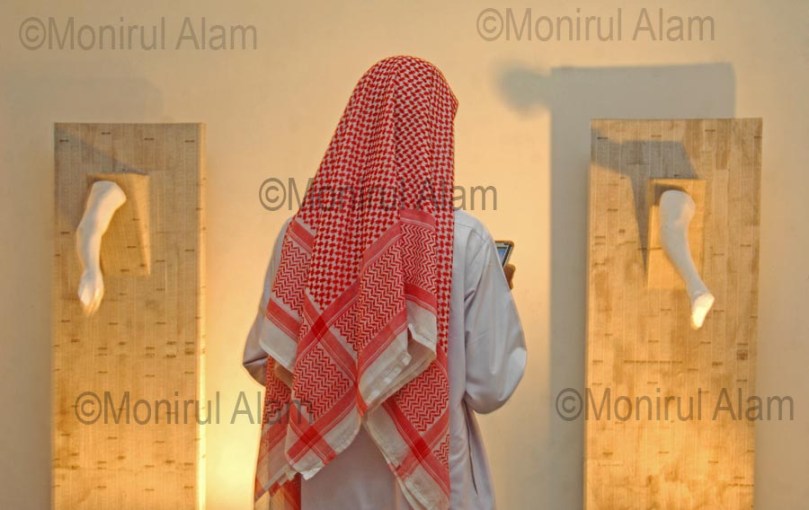
Sacred people & Installation work

National Museum located in the Dhaka city. I observe many interesting thing inside the gallery. People asking many query and express their feeling view very closely specially in sacred people those are not familiar this kind of work. This is one of my selected photos with the series of sacred people & installation work. March 2009 Dhaka, Bangladesh.

Sacred people & Installation work

Photo: Monirul Alam