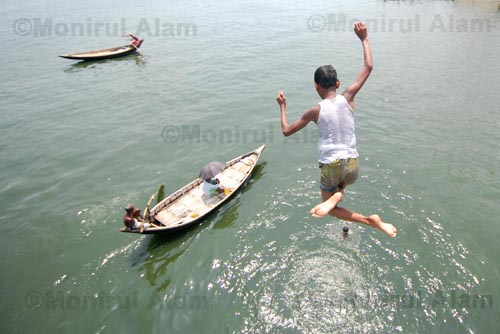
Jump!
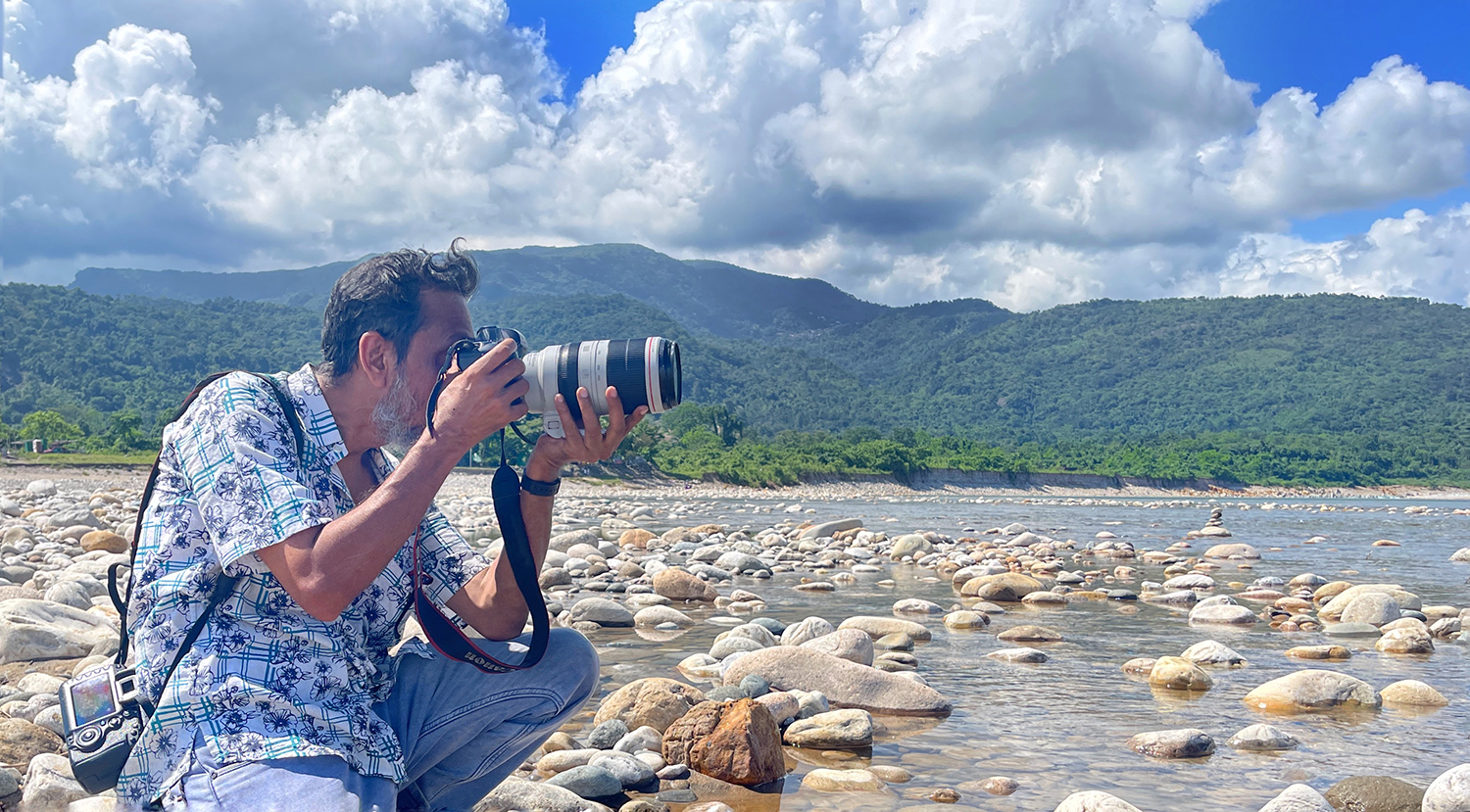
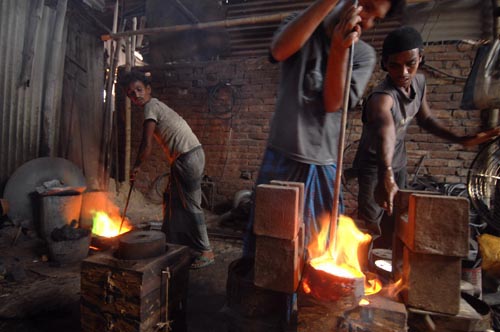
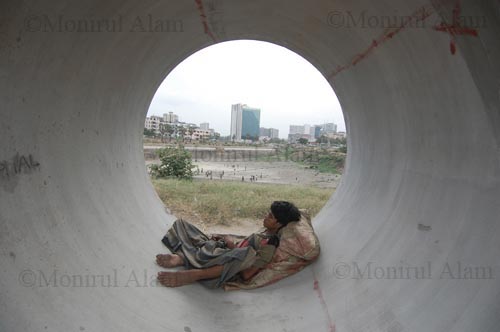

To me- He is a spiritual man and his photography came from his inner philosophy which is really just amazing? Amazing his work . . .
-monirul alam
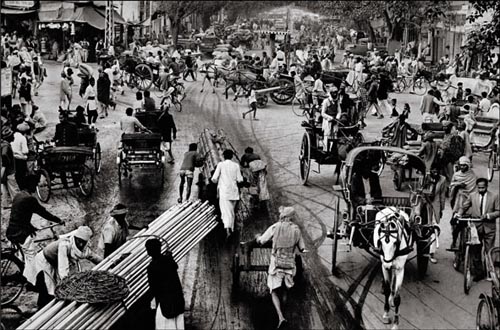
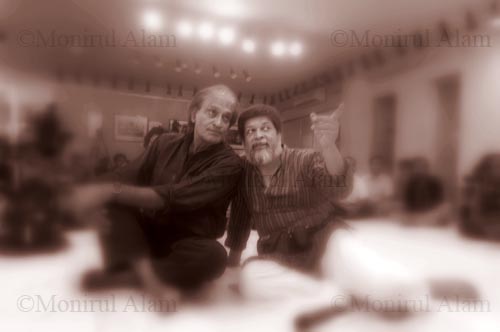
When I was a student of Pathshala I spend many times to see his book like Calcutta, TajMahal, India 2001 Bhopal Gas Tragedy,Mere Teresa,India Notes . . . some time I borrow his book from Pathshala library. I think in our sub-continent {maybe the other part of the world} many photographer influences his dramatic works. A few years after- finally I meet him and talked him and get an opportunity to make an interview. Yes I say the world renowned and Magnum Photos photographer Raghu Rai.
I see him as a simple outfit man like other ordinary man and not to caring many more gadgets. Finally we meet at Drik cafe and try to know his photography inner thinking and philosophy. I really amazing his photography thought while I discuss many things abut photography his carrier and his works.
I thanks to Shahidul Alam {Alam bhai} {Drik Founder and Pathshala Principal} to manage to make an interview’s with him.
One things I remember, A few of photojournalist attend a discussion session with Raghu’s . . . he said Picture comes from upstairs you just wait and to learn it . . . you dedicate yourself more 100% into photography . . .
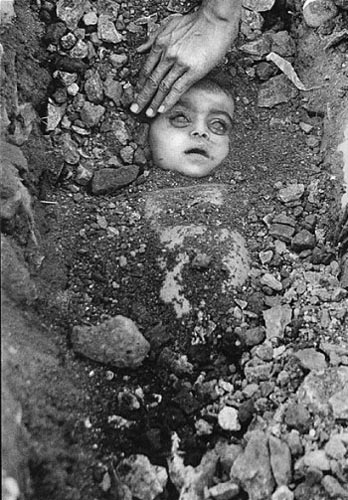
Raghu Rai was born in Small village of Jhhang, now part of Pakistan. He took up photography in 1965. In 1966 Rai took up a job with The Hindustan Times. He was the chief photographer of The Statesman, picture editor of Sunday (Calcutta) and worked as editor/visualiser/photographer of India Today, in its early days. In 1977, Cartier-Bresson asked him to join Magnum Photos. During the last 18 years his extensive coverage of India resulted in 20 books. His work with Greenpeace on the Bhopal chemical disaster resulted in a book, exhibitions which brought him international fame in 2004. He is still associated with Magnum Photos.
Monirul: How do you feel about Bangladesh and Bangladeshi people?
Raghu: Very friendly, Bangladesh is like India in may ways but Bangladesh are very nice and gentle people they are very good, your landscape are good but the growth specific direction like India and that should I don’t like about us part of the world and the still of the architecture enormous vast in big cities in India. This is not a good thing because you must lean…. take care of us design aesthetic everything the people is beautiful the landscape is beautiful like you know specific is beautiful . . .
Monirul: How do you feel about Bangladesh and Bangladeshi people?
Raghu: Very friendly, Bangladesh is like India in may ways but Bangladesh are very nice and gentle people they are very good, your landscape are good but the growth specific direction like India and that should I don’t like about us part of the world and the still of the architecture enormous vast in big cities in India. This is not a good thing because you must lean…. take care of us design aesthetic everything the people is beautiful the landscape is beautiful like you know specific is beautiful . . .
Raghu: Just by an accident because I pick up camera to pick them fun picture depends out to be good….
Monirul: You must have received many honors and prize in your photography life would you please tell us about them?
Raghu: I was first Indian Photographer who was given Padamshree it is one of important award and I won many Nickon award and I won to other international award.
Raghu: I would like very each other photographer works and preventively I come to the point we are the nature and life are the influence is not anybody.
Monirul: We know that you have been long time in the photography media, what’s your ultimate goal?
Raghu: because I don’t know, my ultimate goal may be I dedicate myself more 100% into photography and some reaily create work may be living everything and just become God knows who knows.
Raghu: I admire many Photographers. I admire anybody works which was got regionally and wide range. They are so many good photographs so much good work. This is not one.
Raghu: My personal life form any human being works mother Teresa.
Monirul: What is the present position of photography in the World in your mind?
Raghu: I am working on 3-4 picture books and I would like complete them best possibly with and biggest project that I working 150 years in national gallery of Modern Art New Delhi that was published as a book. Then it will go abroad which is the most prestigious and important project of my life.
Raghu: Basically you know working on my picture book in the process of editing, in the process of color correction and some books….. Makes line any of my projects….
Raghu: I like any kind branch of photography as long as there is freshness and there is vitality and this energy effect can hart beat stop for the moment there is great but effect reutilize your inspirit even that is good enough .. but you would like casual picture.
Monirul: Do you have any comments to a new generation photographer?
Raghu: Basically you know what even you do it 100% be 100% then do it. You have physically, mentally and spiritually into a 100% good enough if you can’t do it.
Monirul: Thank you for your interview.
Raghu: Thank you.
Link Page:
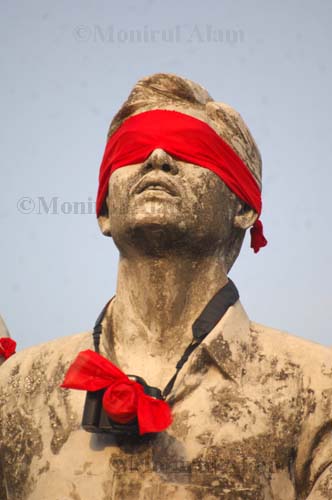
The photography exhibition titled “Crossfire” by noted photojournalist Shahidul Alam was finally opened for public at Drik Gallery yesterday, eight days after police obstructed visitors from entering the gallery.
Shahidul Alam, also managing director of Drik, said yesterday the government lawyers confirmed that the police deployed in front of his gallery were withdrawn and there would be no further obstruction.
The deadline of the exhibition opened for public around 5:00pm was extended to April 14.
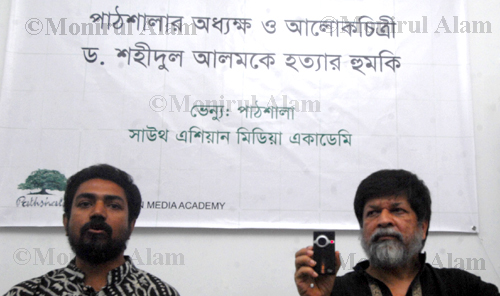
The schedule was extended as the previous deadline ended yesterday, Alam told a press conference at Pathshala, South Asian Media Academy and the educational wing of Drik.
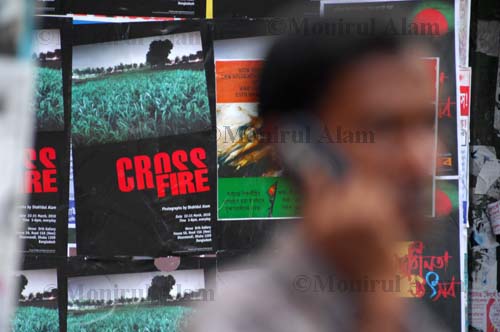
“The exhibition was on and continued so far, but people could not enter the Gallery,” he said.
He added they have taken an alternative measure to hold the exhibition in the building as they have to leave the gallery for other prescheduled exhibitions.
“We would not be able to hold the exhibition the way we have planed it. But we are trying to hold it in other way at the building,” he said.
On the exhibition, he said, “Crossfire is a much-talked-about issue and we think we have something to say about it.
“Though the government pledged to stop crossfire before and after the elections, it is still occurring which is a matter of worry,” Alam said. He alleged the events of “crossfire” occurring in 2009 are higher than what happened during the army-backed caretaker government in 2008.
“When the exhibition could create such reaction only because of having the name ‘crossfire’, the meaning of the word comes clear,” he said.
Besides, there is no reason to raise objection to the exhibition and those who raised objection know the relation between photographs and crossfire, he added.
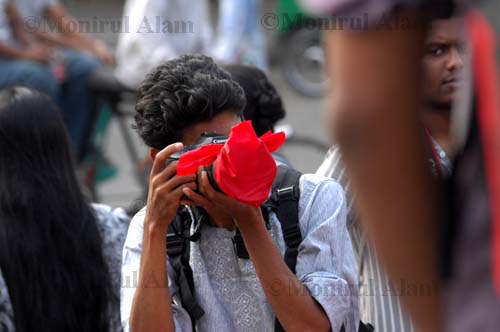
“This sort of bar from the government is illegal and we protest against it,” he said.
Meantime, the authorities of Pathshala at the press conference demanded immediate arrest and punishment of the people who gave death threat to its Principal Shahidul Alam twice for the exhibition.
Expressing concern, they demanded that security measures for Alam be ensured.
Pathshala Vice-principal Abir Abdullah said an anonymous man on March 26 and another on March 27 threatened Alam with death and asked about the reasons of the exhibition.
“We think every citizen of the country should have the freedom of expression,” he said.
Regarding the threat, Alam said it is a matter of regret for the people when a citizen issued death threat to another in front of the law-enforcement agencies.
“I cannot even do the normal work now,” he said.
(Report on the Daily Star newspaper)
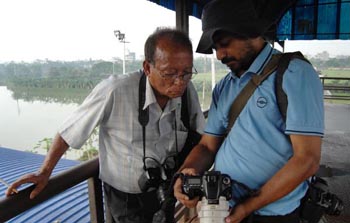
Note: Please click on the image to read my bangla write up about Bangladeshi war photojournalist Mohammad Alam . . .
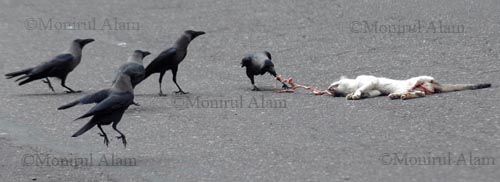
Social injustices, Political crises, Ignoring the nature are the common topic of our daily life. We are leaving in a civilized world, as a member of this large civilized society. Most of the time we failed to fell the rhythm between the thought, words and act, every where there is a conflict . . .



 MONIRUL ALAM