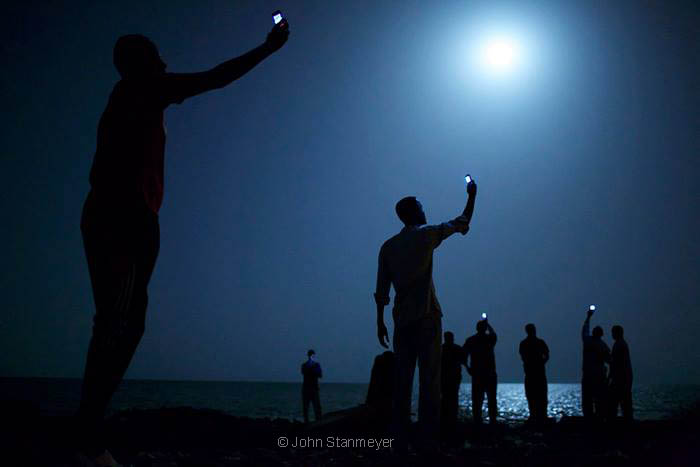
Finally, I congratulate to John Stanmeyer for his beautiful and brilliant picture, to get awarded the WORLD PRESS PHOTO of the year,to me it’s appear in a new look with a great notice and message, thanks to approach this kind of work to us, and thanks to the World Press Photo to Honor him . . .
Caption: African migrants on the shore of Djibouti city at night, raising their phones in an attempt to capture an inexpensive signal from neighboring Somalia—a tenuous link to relatives abroad. Djibouti is a common stop-off point for migrants in transit from such countries as Somalia, Ethiopia and Eritrea, seeking a better life in Europe and the Middle East.
Humbled. Honored. Speechless. Thank you to all for your kind words.
Have been asked countless times today what this photograph, Signal, means to me. While standing on the shores of the Red Sea that evening in Djibouti City, it felt as if I was photographing all of us — you, me, our brothers and sisters — all desperately trying to connect to our loved ones. In this tenuous period of human migration where despair and hope simultaneously intertwine, we seek to find comfort, a sense of balance, a desire to be home, reconnecting to something stable, reassuring. This photograph of Somalis trying to “catch” a signal is an image of all of us as we stand at the crossroads of humanity, where we must ask ourselves what is truly important, demanding our collective attention in a global society where the issues of migration, borders, war, poverty, technology and communication intersect.
Climate change touches already every corner of the world and every aspect of people’s lives. As the global temperature increases, its impacts will become even more extreme. The impact of climate change world is already facing food and fuel crises. World Bank and IMF have sounded a larger alarm push 100 million people in low-income countries deeper into poverty. Bangladeshi is a country that stands to be one of the first to suffer from global climate change, and the time to act is now.
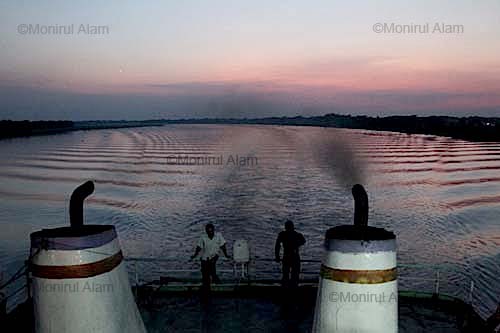
Patukhali south part of Bangladesh, October 2010. Mujibor and Khaled stand on the launch deck who left their houses away to Dhaka city for searching job.Copy Right:Monirul Alam
The IPCC warns of devastating floods, drought, extreme weather, hunger, and disease across the world in decades to come.
Bangladesh faces all of that already, and climate change will accelerate it. Once a byword for backwardness, Bangladesh is now a glimpse of everyone’s future.
Climate change touches already every corner of the world and every aspect of people’s lives. As the global temperature increases, its impacts will become even more extreme. The impact of climate change world is already facing food and fuel crises. World Bank and IMF have sounded a larger alarm push 100 million people in low-income countries deeper into poverty. Bangladeshi is a country that stands to be one of the first to suffer from global climate change, and the time to act is now. Analysts say it could trigger a migration the size of which the world has never before seen. Some of the big questions remain unanswered. I began to document of marginal condition in my own country. Increasingly severe floods, cyclones and other climate-related changes have already forced the migration of many
Note: Please click the link page to see the full stories and send your opinion
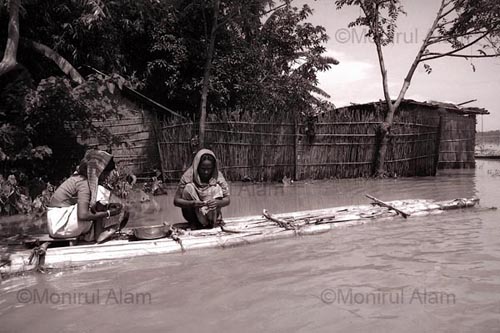
Actually I documented past five years under theme of “climate refugee of Bangladesh”. For my project I went to the north part of Bangladesh located Kurigram district, Musullir Char near Dharla River which is link with the Bank of River Jamuna. People are commonly known Monga area. I documented their lifestyle and struggling position, my observation is that, they are already migrant and displace their original root.
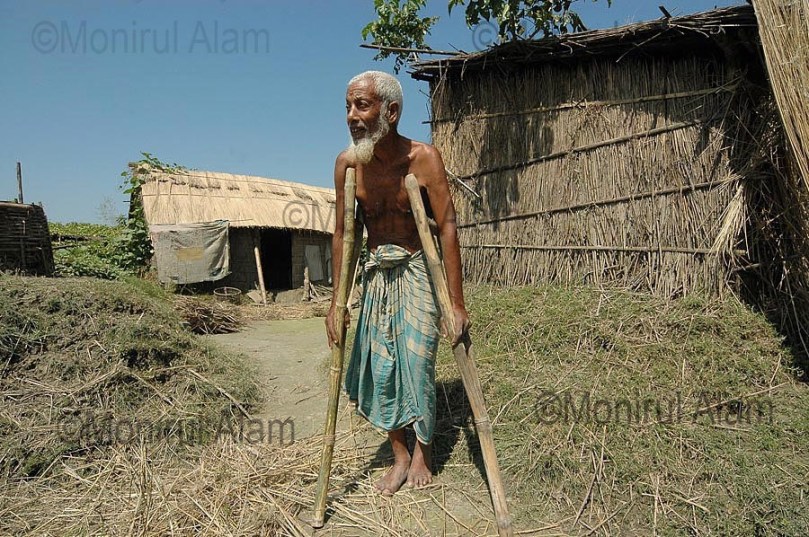
Finally I get down that area, huge number of people around me and looking my camera they are very curious about my camera specially children. May be first time they see this kind of camera. I spent more time and listen their problem. An old age man Rafiqul said, “We only depend on Allah. You are the first visitor to arrive this area, No one can visit our area but we survive, we struggle very inhuman life.”
Rising sea levels and the growing number of natural disasters forced by climate change are already driving migration and displacement. What I am doing for them. I think through my photo stories to make awareness the world’s people who are doing something for them. This is one of my selected photos which I use my blog. October 2005, Kurigrame, Bangladesh
 MONIRUL ALAM