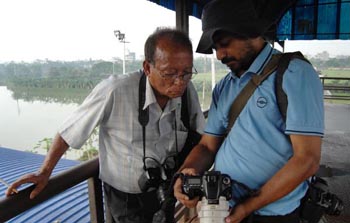
Note: Please click on the image to read my bangla write up about Bangladeshi war photojournalist Mohammad Alam . . .
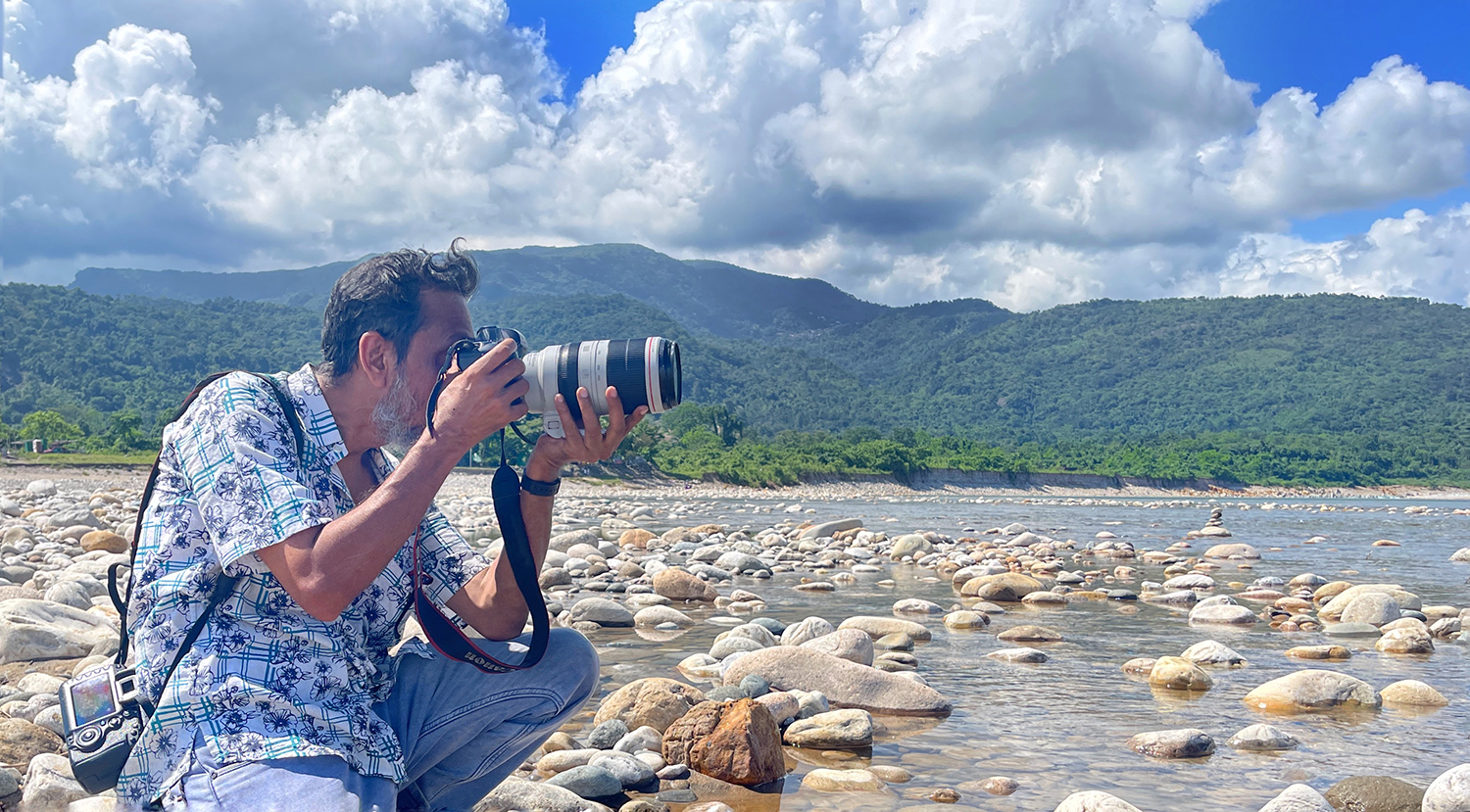
Note: Please click on the image to read my bangla write up about Bangladeshi war photojournalist Mohammad Alam . . .
Social injustices, Political crises, Ignoring the nature are the common topic of our daily life. We are leaving in a civilized world, as a member of this large civilized society. Most of the time we failed to fell the rhythm between the thought, words and act, every where there is a conflict . . .

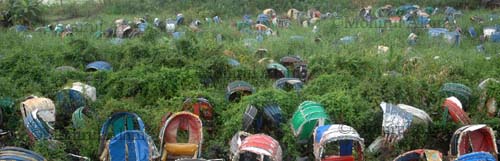
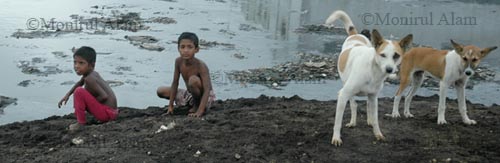
We have no drinking water due to salinity; the high tide raised in significant rate the embankments had collapsed three times within last two years said a villager Mohammad Johor Ali who is working as a boatman. When the storm is arrived I went to take shelter near a small cannel and anchor my boat at BDR (ghat) slope and praying to the Allah and just waiting for die because situation is not to explain …. I think the Allah save me ….
-Mohammad Johor Ali, A Boat Man, Gabura Village
Bangladesh is situated at the interface of two different environments, with the Bay of Bengal to the south and the Himalayas to the north. This peculiar geography of Bangladesh causes not only life-giving monsoons but also catastrophic ravages of natural disasters, to which now are added climate change. Floods, Droughts Cyclones and Tidal surges are common threats now in Bangladesh. The country has a very low and flat topography, except the northeast and southeast regions. About 10 percent of the country is hardly 1 meter above the Mean Sea Level, and one-third is under tidal excursions.
Gabura is like an Island. It is the most southern settlement of Southwest Coastal Bangladesh. Increased salinity interruptions, agricultural damage, high tide rose, drinking water crises and frequent tiger attack is daily hazard of the people. The name of Gabura is widely discussed as become almost barren land after cyclone Aila. I was there, after nine month of cyclone Aila to see and talked with them.
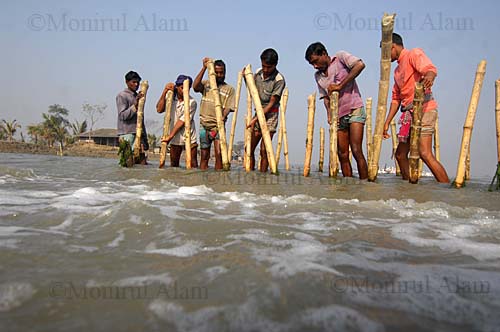
People rebuild their collapsed embankment again and again. They fight with bamboo, mud and full of their energy against the sea- they lost their homeland but not to their hope, they fight and struggle continuously for surviving their lives. I think their struggle against the sea is really amazing it’s an example for the world’s people at the same time I deeply observed to their salty tears that lost their dearest one’s . . .
We want justice without any delay. There is no mercy for such brutality . . .
-Victim’s Family Member
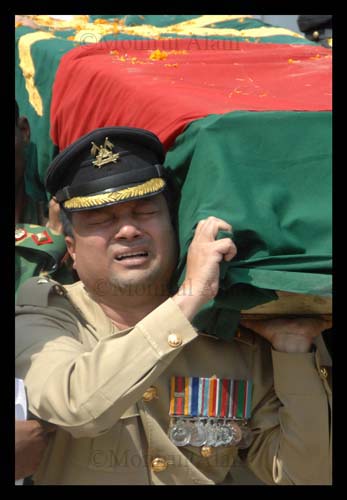
One year has passed since the heinous massacre of 74 persons including 57 top and mid-ranking army offices. The horrifying memory of the incident is still fresh in the mind of the nation. Family members of the victims of February 25-26 BDR carnage want justice since it is the only thing at present than can their broken souls. (Daily Star 25, 2010)
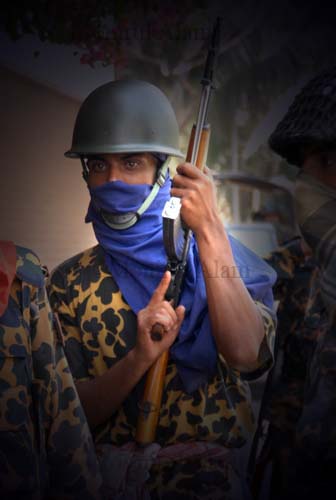
A number of committed soldiers of the Bangladesh Rifles (BDR) rebelled against their officers on February 25/2009. The mutiny broke out during an open meeting, of the BDR director general, Major General Shakil Ahmed. The occasion was scheduled as part of the BDR Week observance at the border guards’ headquarters at Pilkhana in the heart of Dhaka. As it has transpired from testimonies of surviving officers, the rebellion began with execution of army officers attending the meeting. During their blockade of Pilkhana, 74 people, including 57 army officers, were killed. The mayhem that went on for about those 33 hours left the entire nation in shock.
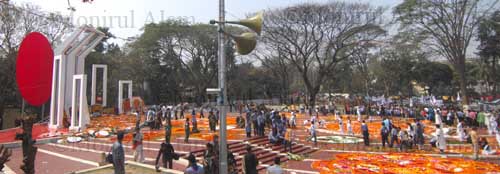
Amar Ekushey, also the International Mother Language Day, was observed with solemnity and in the most befitting manner across the country paying glowing tributes to the language movement martyrs.
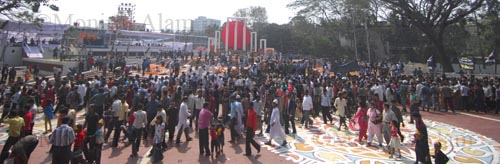
Dhaka 21 February 2010- Shaheed Minar-Copy Right-Monirul Alam
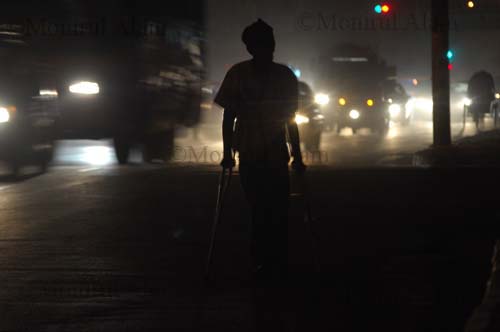
No one can help me, so I don’t have any other way except begging. I leave on the street and everyday earn taka 30/40. I am also taking drugs for frustrating my life hood.
-Zahid, a street bagger & drug user
A lame man is walking on the street at night. His name is Zahid who lost his left leg by suffering typhoid since his childhoods he said, after years he came to Dhaka from his village Bagura north part of Bangladesh and start begging for surviving. He said no one can help me, so I don’t have any other way except begging. I leave on the street and everyday earn taka 30/40. I am also taking drugs for frustrating my life hood. Some time the police pick me up from the street and release outskirts of Dhaka. We suffer a lot but no one can help us for a good job or rehabilitations.
Many impede people living on the street. River erosion, tidal wave and other calamities are turning many village people on the breadline, forcing them to migrant to the capital with the hope of getting some work for a living. The disable people have way out begging.
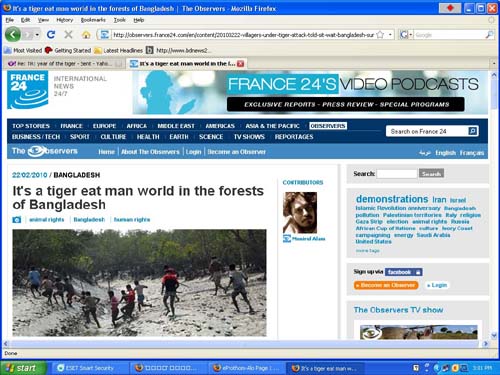
One of the world’s largest tiger populations could disappear by the end of this century as rising sea levels caused by climate change destroy their habitat along the coast of Bangladesh in an area known as the Sundarbans.
-Recent study of WWF
The Sundarbans is a UNESCO world heritage site spread across 3,700 square miles (9,583sq km) in Bangladesh and another 2,400 square in India- the Ganges river delta, across the border between India and Bangladesh. It is home to an estimated 440 Bengal tigers, according to a joint Indian and Bangladeshi survey done in 2004.
Since a Cyclone Sidr and Aila the conflict between tiger and human has risen to a new arena- highlighting the environmental threats to this unique habitat. Climate Change is simply double edged the problem. Frequently sea-depression, cyclone and storm-rushes, widespread riverbank erosion, salinity interruption, raised high tied and long-lasting summer has increased the vulnerability in alarming level. After nine month of cyclone Aila thousand of people settle down on the embankment and leaving inhuman life that lost their home and land which is flooded with seawater. Hunger people now enter the forest every day and regular facing tiger attack.
“We enter the Jangle for searching food and the tiger killed us . . . beside . . . the tiger came to our village we killed the tiger. The situation is endangered now. We need to be a good solution.”
-Abul Sarder, Villager who narrowly escape from the tiger attack
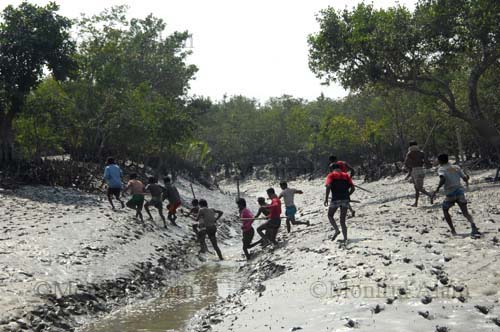
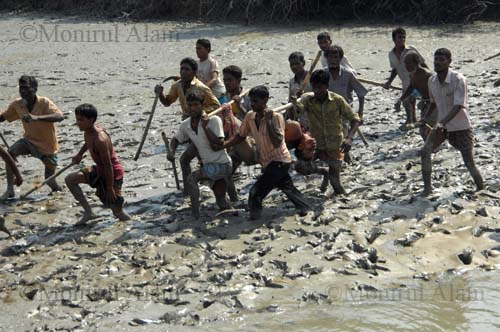
A wood-cutter was killed by a man-eating Bengal tiger in Bangladesh’s southern Sundarbans forest this month February 2010. The tiger killed Mabud 40, deep in the mangrove forest where collecting firewood in the area of char-shesher. Abul Sarder said, we five people enter the Jangle for collecting firewood suddenly the tiger attacked us- we narrowly escape but Mabud is not! We tried to safe him but failed from the tiger attack.
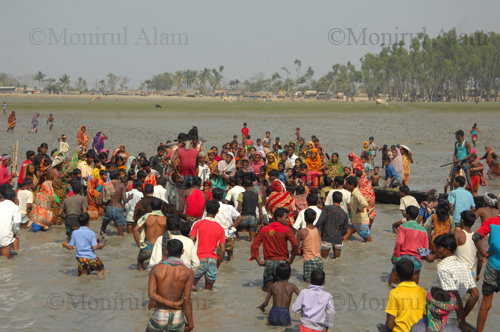
We back to village and come again more than hundred-twenty people with stick, hand through bomb and local weapon to snatch Mabud dead body from the tiger, at last we collect his body, but we afraid, may be the hunter could arrive our village for searching his hunt. He also said Mabud live in village Burigualini under the district of Satkhira. Abul Sarder also said we knew the dangers of the forest, but we couldn’t do anything else to survive. Because our embankments had collapsed three times within last two years, we are the worst victims by the climate change.
Since the 1980 to 2010 Tigers have killed 116 people and villager have killed 7 tiger within 11 years in the Sundarbans under the district of Satkhira according to forestry officials.

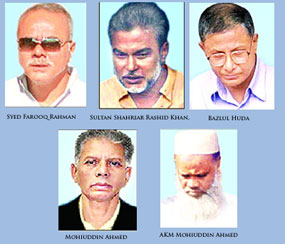
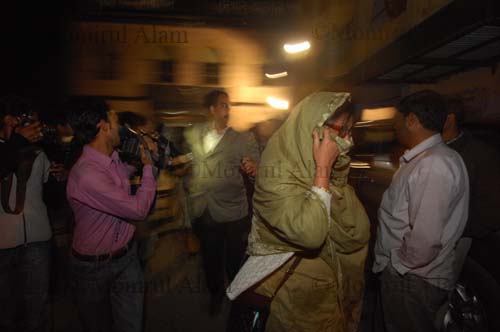
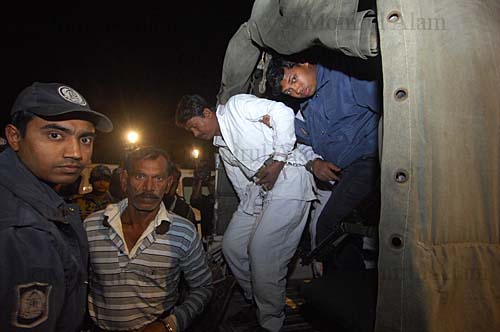
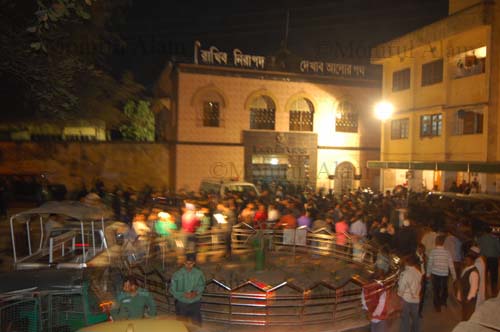
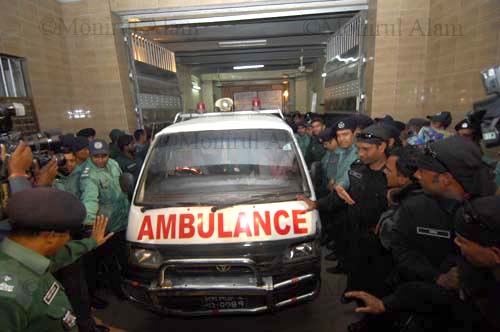
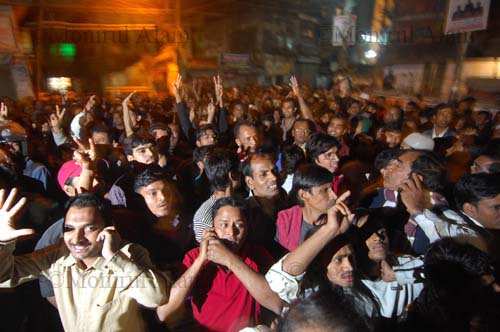
Five condemned killers of Bangabandhu Sheikh Mujibur Rahman ware hanged at Dhaka Central Jail amid tight security. The five killers Syed farooq Rahman, Sultan Shahriar, Rashid Khan, Bazlul Huda, AKM Mohiuddin Ahmed and Mohiuddin Ahmed.The bodies of the five were sent to their village homes by five ambulances under police and Rab escort after conducting post mortem. It has taken over 34 years to ensures justices since August 15, 1975 heinous killing of Bangabandhu Sheikh Mujbur Rahman. The Authorities had taken up a three-layer security measure for the execution-Copy Right-Monirul Alam
 MONIRUL ALAM