Raghu Rai: Interview

To me- He is a spiritual man and his photography came from his inner philosophy which is really just amazing? Amazing his work . . .

-monirul alam
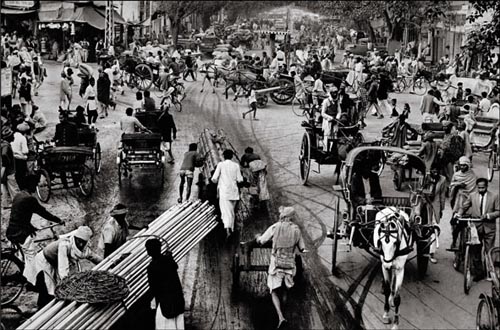

Traffic At Chawri Bazar, Delhi, 1964.Copy Right-Raghu Rai

When I was a student of Pathshala I spend many times to see his book like   Calcutta, TajMahal, India 2001 Bhopal Gas Tragedy,Mere Teresa,India Notes . . . some time I borrow his book from Pathshala library. I think in our sub-continent {maybe the other part of the world} many photographer influences his dramatic works. A few years after- finally I meet him and talked him and get an opportunity to make an interview. Yes I say the world renowned and Magnum Photos photographer Raghu Rai.

I see him as a simple outfit man like other ordinary man and not to caring many more gadgets.  Finally we meet at Drik cafe and try to know his photography inner thinking and philosophy. I really amazing his photography thought while I discuss many things abut photography his carrier and his works.

I thanks to Shahidul Alam {Alam bhai} {Drik Founder and Pathshala Principal} to manage to make an interview’s with him.

One things I remember, A few of photojournalist attend a discussion session with Raghu’s  . . .  he said Picture comes from upstairs you just wait and to learn it . . . you dedicate  yourself more 100% into photography . . .
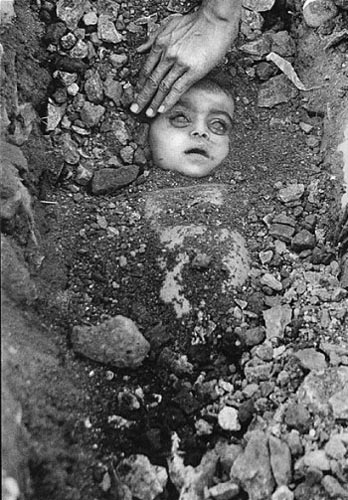
The famous photographs that has come to symbolize the great Bhopal gas tragedy.Copy Right-Raghu Rai

Raghu Rai was born in Small village of Jhhang, now part of Pakistan. He took up photography in 1965. In 1966 Rai took up a job with The Hindustan Times. He was the chief photographer of The Statesman, picture editor of Sunday (Calcutta) and worked as editor/visualiser/photographer of India Today, in its early days. In 1977, Cartier-Bresson asked him to join Magnum Photos. During the last 18 years his extensive coverage of India resulted in 20 books. His work with Greenpeace on the Bhopal chemical disaster resulted in a book, exhibitions which brought him international fame in 2004. He is still associated with Magnum Photos.

Monirul:  How do you feel about Bangladesh and Bangladeshi people?

Raghu: Very friendly, Bangladesh is like India in may ways but Bangladesh are very nice and gentle people they are very  good,  your landscape are good but the growth specific direction like India and that should I don’t like about us part of the world and the still of the architecture enormous vast in big cities in India. This is not a good thing because you must lean…. take care of us design aesthetic everything the people is beautiful the landscape is beautiful like you know specific is beautiful . . .

Monirul:  How do you feel about Bangladesh and Bangladeshi people?

Raghu: Very friendly, Bangladesh is like India in may ways but Bangladesh are very nice and gentle people they are very  good,  your landscape are good but the growth specific direction like India and that should I don’t like about us part of the world and the still of the architecture enormous vast in big cities in India. This is not a good thing because you must lean…. take care of us design aesthetic everything the people is beautiful the landscape is beautiful like you know specific is beautiful . . .

Monirul: How did you to come into Photography?

Raghu: Just by an accident because I pick up camera to pick them fun picture depends out to be good….


Monirul: You must have received many honors and prize in your photography life would you please tell us about them?

Raghu: I was first Indian Photographer who was given Padamshree it is one of important award and I won many Nickon award and I won to other international award.


Monirul: Who was the influence in your photography?

Raghu: I would like very each other photographer works and preventively I come to the point we are the nature and life are the influence is not anybody.

Monirul: We know that you have been long time in the photography media, what’s your ultimate goal?

Raghu: because I don’t know, my ultimate goal may be I dedicate myself more 100% into photography and some reaily create work may be living everything and just become God knows who knows.

Monirul: Who are the photographers you admire?

Raghu: I admire many Photographers. I admire anybody works which was got regionally and wide range. They are so many good photographs so much good work. This is not one.

Monirul: Can you tell me of any incident (photography) in your photography life?

Raghu: My personal life form any human being works mother Teresa.

Monirul: What is the present position of photography in the World in your mind?

Raghu: I am working on 3-4 picture books and I would like complete them best possibly with and biggest project that I working 150 years in national gallery of Modern Art New Delhi that was published as a book. Then it will go abroad which is the most prestigious and important project of my life.

Monirul: Can you explain your current activities of photography?

Raghu: Basically you know working on my picture book in the process of editing, in the process of color correction and some books….. Makes line any of my projects….


Monirul: Mostly which type of photographs do you like?

Raghu: I like any kind branch of photography as long as there is freshness and there is vitality and this energy effect can hart beat stop for the moment there is great but effect reutilize your inspirit even that is good enough ..  but you would like casual picture.


Monirul: Do you have any comments to a new generation photographer?

Raghu: Basically you know what even you do it 100% be 100% then do it. You have physically, mentally and spiritually into a 100% good enough if you can’t do it.


Monirul: Thank you for your interview.

Raghu: Thank you.
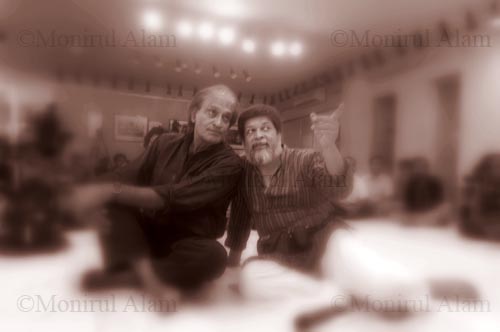
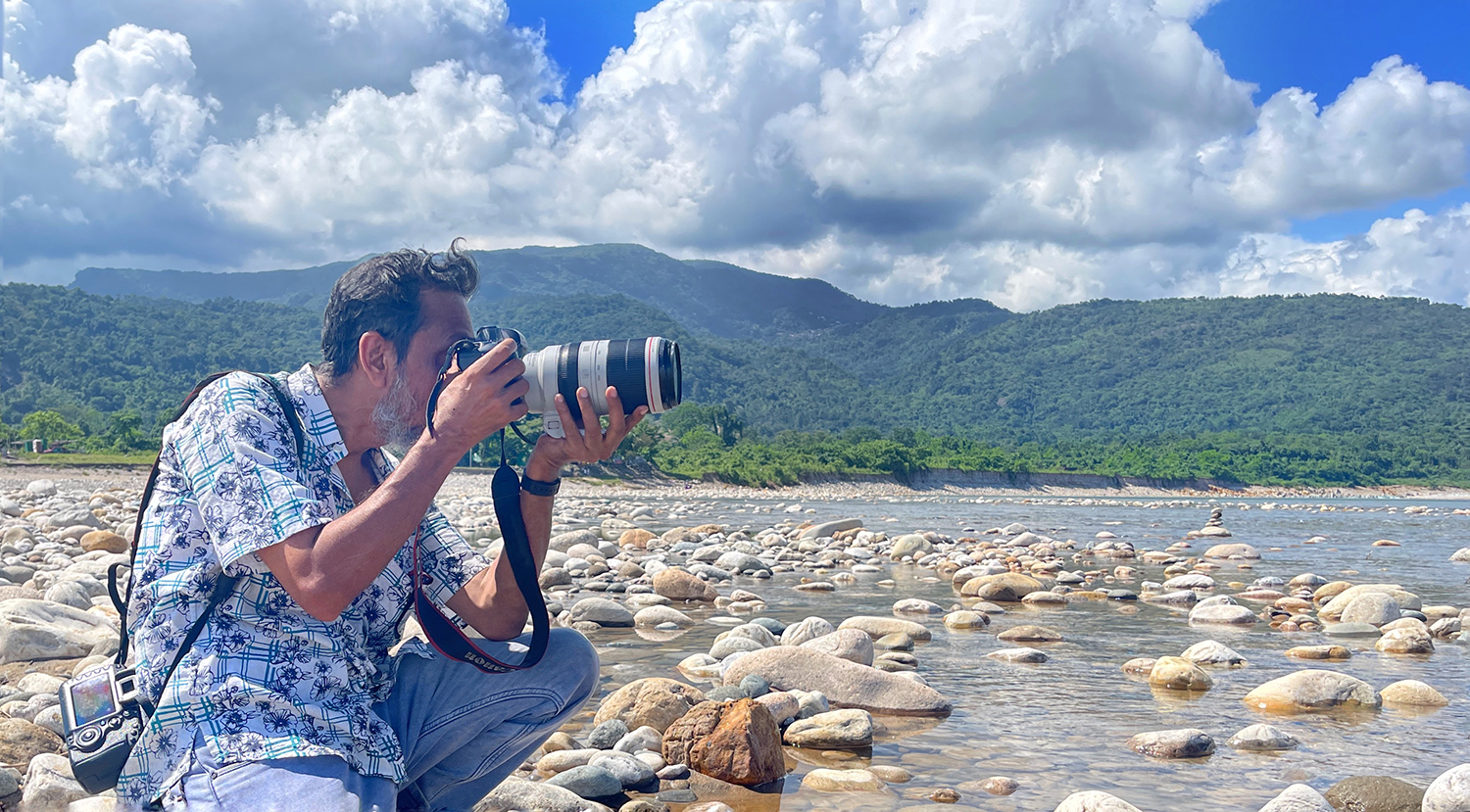
Dhaka-September-2009. Raghu Rai and Shahidul Alam discuss with photography at Drik Gallery. Copy Right-Monirul Alam


Link Page:

http://www.magnumphotos.com/Archive/C.aspx?VP=XSpecific_MAG.PhotographerDetail_VPage&l1=0&pid=2K7O3R13L4PM&nm=Raghu%20Rai


Freedom of Expression

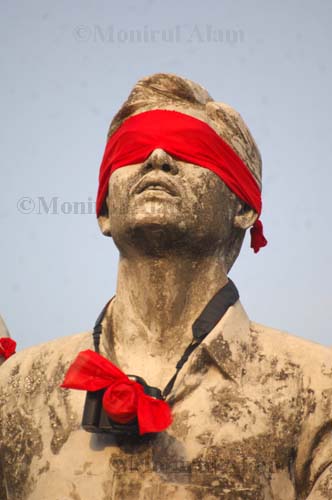
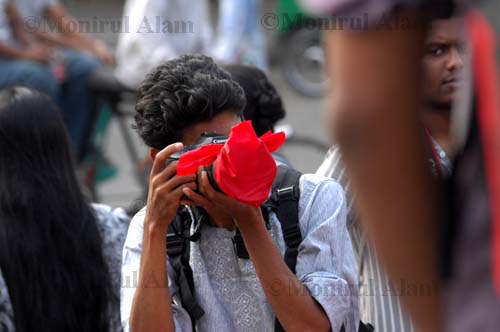
Dhaka University Raju Vaskorjo March 2010-Freedom of Expression.Photographers and students from the South Asian Media Academy on Monday demonstrate protest against the law personnel and unauthorized shut down of Shahidul Alam's Crossfire exhibition at Drik Gallery on March 22.-Copy Right-Monirul Alam

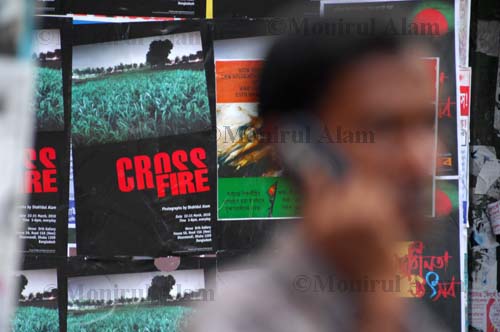
The photography exhibition titled “Crossfire” by noted photojournalist Shahidul Alam was finally opened for public at Drik Gallery yesterday, eight days after police obstructed visitors from entering the gallery.

Shahidul Alam, also managing director of Drik, said yesterday the government lawyers confirmed that the police deployed in front of his gallery were withdrawn and there would be no further obstruction.

The deadline of the exhibition opened for public around 5:00pm was extended to April 14.

The schedule was extended as the previous deadline ended yesterday, Alam told a press conference at Pathshala, South Asian Media Academy and the educational wing of Drik.

Dhaka University March 2010- Freedom of Expression-Copy Right-Monirul Alam

“The exhibition was on and continued so far, but people could not enter the Gallery,” he said.

He added they have taken an alternative measure to hold the exhibition in the building as they have to leave the gallery for other prescheduled exhibitions.

“We would not be able to hold the exhibition the way we have planed it. But we are trying to hold it in other way at the building,” he said.

On the exhibition, he said, “Crossfire is a much-talked-about issue and we think we have something to say about it.

“Though the government pledged to stop crossfire before and after the elections, it is still occurring which is a matter of worry,” Alam said. He alleged the events of “crossfire” occurring in 2009 are higher than what happened during the army-backed caretaker government in 2008.

“When the exhibition could create such reaction only because of having the name ‘crossfire’, the meaning of the word comes clear,” he said.

Besides, there is no reason to raise objection to the exhibition and those who raised objection know the relation between photographs and crossfire, he added.

Dhaka University March 2010-Freedom of Expression.Photographers and students from the South Asian Media Academy on Monday demonstrate protest against the law personnel and unauthorized shut down of Shahidul Alam's Crossfire exhibition at Drik Gallery on March 22.-Copy Right-Monirul Alam

“This sort of bar from the government is illegal and we protest against it,” he said.

Meantime, the authorities of Pathshala at the press conference demanded immediate arrest and punishment of the people who gave death threat to its Principal Shahidul Alam twice for the exhibition.

Expressing concern, they demanded that security measures for Alam be ensured.

Pathshala Vice-principal Abir Abdullah said an anonymous man on March 26 and another on March 27 threatened Alam with death and asked about the reasons of the exhibition.

“We think every citizen of the country should have the freedom of expression,” he said.

Regarding the threat, Alam said it is a matter of regret for the people when a citizen issued death threat to another in front of the law-enforcement agencies.

“I cannot even do the normal work now,” he said.

(Report on the Daily Star newspaper)

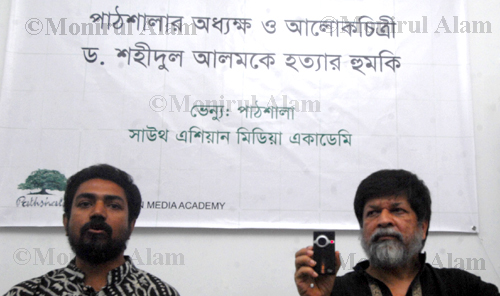
Dhaka Pathshala March 2010-Dr. Shahidul Alam principal of Pathshala (right) and Abir Abdullah Vice-Principal (left) at a press conference -Copy Right-Monirul Alam


Bangladeshi War Photojournalist

Please Click the picture to read bangla text
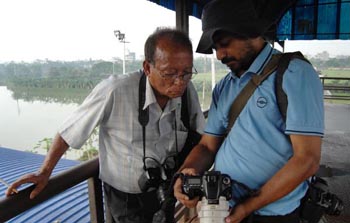
Dhaka-October 2007-War photojournalist Mohammad Alam left and photojournalist Abir Abdullah (EPA) discuss with digital camera. I took this picture at Air port railway station on 10 Oct 2007 Copy Right- Monirul Alam

Note: Please click on the image to read my bangla write up about Bangladeshi war photojournalist Mohammad Alam . . .

Conflict Series

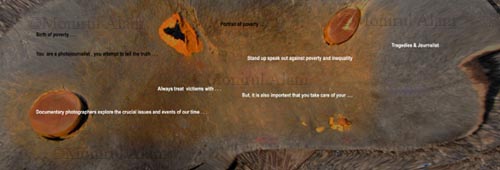
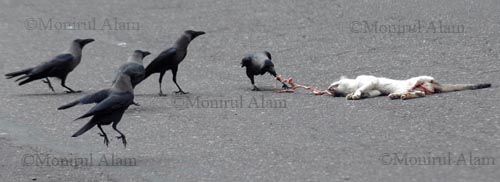
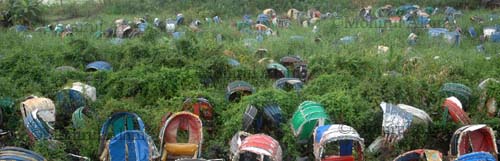
Social injustices, Political crises, Ignoring the nature are the common topic of our daily life. We are leaving in a civilized world, as a member of this large civilized society. Most of the time we failed to fell the rhythm between the thought, words and act, every where there is a conflict . . .

Dhaka-University, September 2007-Conflict Series-Copy Right-Monirul Alam
Dhaka-Panthapath, September 2007-Conflict Series-Copy Right-Monirul Alam

Dhaka Elephant Road, July 2006-Conflict Series-Copy Right-Monirul Alam
Dhaka Agargaon, September 2007-Conflict Series-Copy Right-Monirul Alam
Dhaka Baribadh, July 2006-Conflict Series-Copy Right-Monirul Alam

Salty Tears . . .

We have no drinking water due to salinity; the high tide raised in significant rate the embankments had collapsed three times within last two years said a villager Mohammad Johor Ali who is working as a boatman. When the storm is arrived I went to take shelter near a small cannel and anchor my boat at BDR (ghat) slope and praying to the Allah and just waiting for die because situation is not to explain …. I think the Allah save me ….

                                 -Mohammad Johor Ali, A Boat Man, Gabura Village

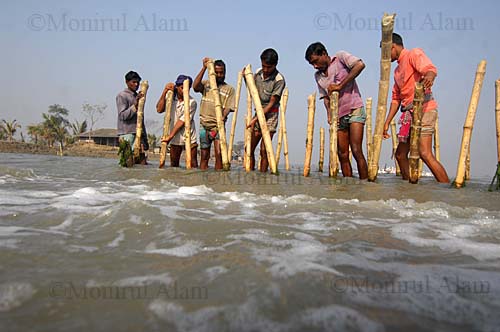
Gabura,Satkhera February,2010- People rebuild their collapsed embankment-Copy Right-Monirul Alam

Bangladesh is situated at the interface of two different environments, with the Bay of Bengal to the south and the Himalayas to the north. This peculiar geography of Bangladesh causes not only life-giving monsoons but also catastrophic ravages of natural disasters, to which now are added climate change. Floods, Droughts Cyclones and Tidal surges are common threats now in Bangladesh. The country has a very low and flat topography, except the northeast and southeast regions. About 10 percent of the country is hardly 1 meter above the Mean Sea Level, and one-third is under tidal excursions.

Gabura is like an Island. It is the most southern settlement of Southwest Coastal Bangladesh. Increased salinity interruptions, agricultural damage, high tide rose, drinking water crises and frequent tiger attack is daily hazard of the people. The name of Gabura is widely discussed as become almost barren land after cyclone Aila. I was there, after nine month of cyclone Aila to see and talked with them.

People rebuild their collapsed embankment again and again. They fight with bamboo, mud and full of their energy against the sea- they lost their homeland but not to their hope, they fight and struggle continuously for surviving their lives. I think their struggle against the sea is really amazing it’s an example for the world’s people at the same time I deeply observed to their salty tears that lost their dearest one’s . . .

Bullet, Blood and Bugle . . .

We want justice without any delay. There is no mercy for such brutality . . .

                                             -Victim’s Family Member

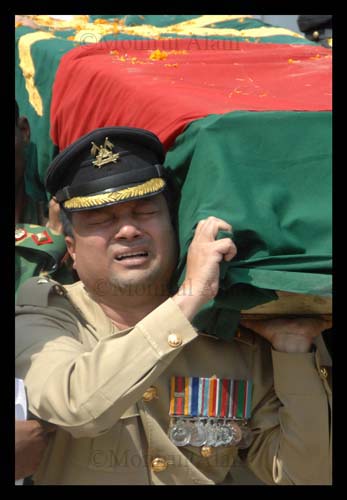
Dhaka, 2009 March- A Officers unable to hold tears the last funeral-Copy Right-Monirul Alam

One year has passed since the heinous massacre of 74 persons including 57 top and mid-ranking army offices. The horrifying memory of the incident is still fresh in the mind of the nation. Family members of the victims of February 25-26 BDR carnage want justice since it is the only thing at present than can their broken souls. (Daily Star 25, 2010)

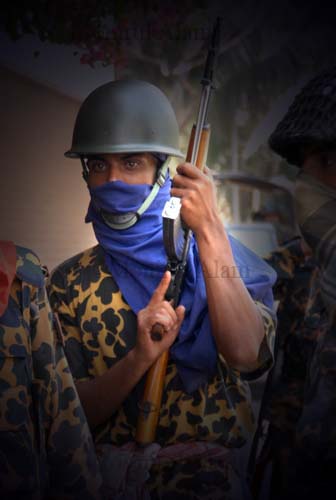
Dhaka, BDR Headquarters 2009 Feb- The rebel BDR (Bangladesh Rifles) soldiers take position with heavy gun in front of BDR Headquarters in Dhaka. During their blockade of Pilkhana-Copy Right-Monirul Alam

A number of committed soldiers of the Bangladesh Rifles (BDR) rebelled against their officers on February 25/2009. The mutiny broke out during an open meeting, of the BDR director general, Major General Shakil Ahmed. The occasion was scheduled as part of the BDR Week observance at the border guards’ headquarters at Pilkhana in the heart of Dhaka. As it has transpired from testimonies of surviving officers, the rebellion began with execution of army officers attending the meeting. During their blockade of Pilkhana, 74 people, including 57 army officers, were killed. The mayhem that went on for about those 33 hours left the entire nation in shock.

Amar Ekushey Observed

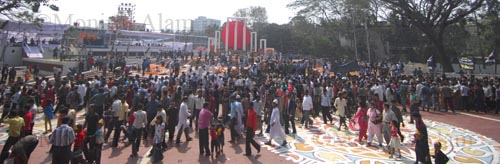
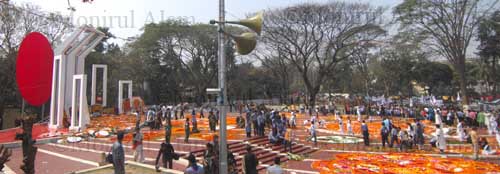
Amar Ekushey, also the International Mother Language Day, was observed with solemnity and in the most befitting manner across the country paying glowing tributes to the language movement martyrs.

Dhaka 21 February 2010- Shaheed Minar-Copy Right-Monirul Alam

Dhaka 21 February 2010- Shaheed Minar-Copy Right-Monirul Alam


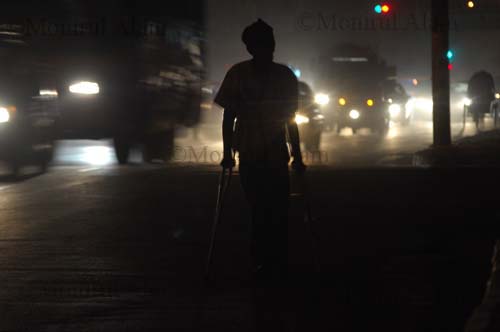
Lame Man Walking

No one can help me, so I don’t have any other way except begging. I leave on the street and everyday earn taka 30/40. I am also taking drugs for frustrating my life hood.

                                                           -Zahid, a street bagger & drug user

A lame man is walking on the street at night. His name is Zahid who lost his left leg by suffering typhoid since his childhoods he said, after years he came to Dhaka from his village Bagura north part of Bangladesh and start begging for surviving. He said no one can help me, so I don’t have any other way except begging. I leave on the street and everyday earn taka 30/40. I am also taking drugs for frustrating my life hood. Some time the police pick me up from the street and release outskirts of Dhaka. We suffer a lot but no one can help us for a good job or rehabilitations.

Many impede people living on the street. River erosion, tidal wave and other calamities are turning many village people on the breadline, forcing them to migrant to the capital with the hope of getting some work for a living. The disable people have way out begging.

Dhaka February 2010-Lame man is walking on the street-Copy Right-Monirul Alam

Man and Tiger in deadly conflict

One of the world’s largest tiger populations could disappear by the end of this century as rising sea levels caused by climate change destroy their habitat along the coast of Bangladesh in an area known as the Sundarbans.
-Recent study of WWF

The Sundarbans is a UNESCO world heritage site spread across 3,700 square miles (9,583sq km) in Bangladesh and another 2,400 square in India- the Ganges river delta, across the border between India and Bangladesh. It is home to an estimated 440 Bengal tigers, according to a joint Indian and Bangladeshi survey done in 2004.

Since a Cyclone Sidr and Aila the conflict between tiger and human has risen to a new arena- highlighting the environmental threats to this unique habitat. Climate Change is simply double edged the problem. Frequently sea-depression, cyclone and storm-rushes, widespread riverbank erosion, salinity interruption, raised high tied and long-lasting summer has increased the vulnerability in alarming level. After nine month of cyclone Aila thousand of people settle down on the embankment and leaving inhuman life that lost their home and land which is flooded with seawater. Hunger people now enter the forest every day and regular facing tiger attack.

“We enter the Jangle for searching food and the tiger killed us . . . beside . . . the tiger came to our village we killed the tiger. The situation is endangered now. We need to be a good solution.”

-Abul Sarder, Villager who narrowly escape from the tiger attack

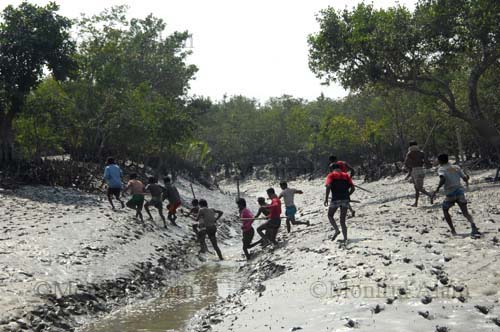
A wood-cutter was killed by a man-eating Bengal tiger in Bangladesh’s southern Sundarbans forest this month February 2010. The tiger killed Mabud 40, deep in the mangrove forest where collecting firewood in the area of char-shesher. Abul Sarder said, we five people enter the Jangle for collecting firewood suddenly the tiger attacked us- we narrowly escape but Mabud is not! We tried to safe him but failed from the tiger attack.

We back to village and come again more than hundred-twenty people with stick, hand through bomb and local weapon to snatch Mabud dead body from the tiger, at last we collect his body, but we afraid, may be the hunter could arrive our village for searching his hunt. He also said Mabud live in village Burigualini under the district of Satkhira. Abul Sarder also said we knew the dangers of the forest, but we couldn’t do anything else to survive. Because our embankments had collapsed three times within last two years, we are the worst victims by the climate change.

Since the 1980 to 2010 Tigers have killed 116 people and villager have killed 7 tiger within 11 years in the Sundarbans under the district of Satkhira according to forestry officials.

Sundarban,Satkhera February 2010-Villager enter the jungle for searching Mabud body-Copy Right Monirul Alam
Sundarban,Satkhera February 2010-At last they found him and carrying very first to escape once more attack - Copy Right Monirul Alam
Sundarban,Satkhera February 2010- Curious villager to see Mabud body- Copy Right Monirul Alam

Bangabandhu Killers Hanged

Dhaka, January 2010- Portrait displaying of Bangabandhu Shikh Mujibur Rahman at Kazi Nazrul Islam Avenue, recently this portrait install for South Asian Games- Copy Right-Monirul Alam

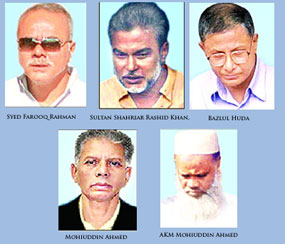
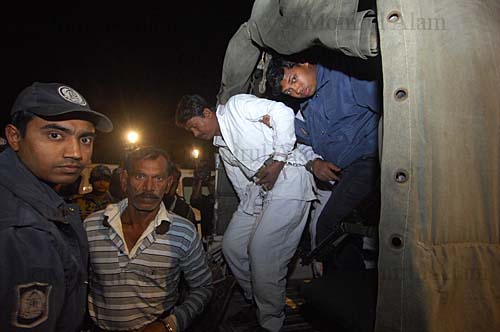
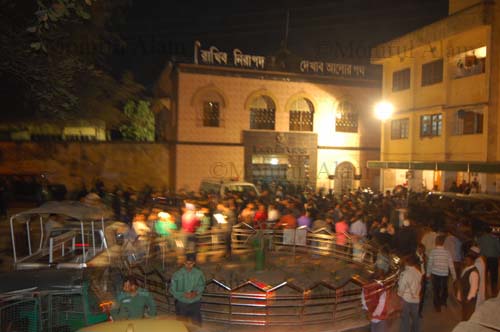
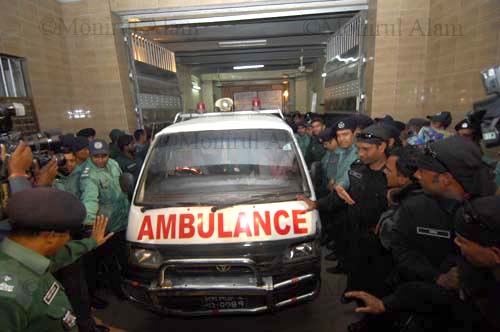
Five condemned killers of Bangabandhu Sheikh Mujibur Rahman ware hanged at Dhaka Central Jail amid tight security. The five killers Syed farooq Rahman, Sultan Shahriar, Rashid Khan, Bazlul Huda, AKM Mohiuddin Ahmed and Mohiuddin Ahmed.The bodies of the five were sent to their village homes by five ambulances under police and Rab escort after conducting post mortem. It has taken over 34 years to ensures justices since August 15, 1975 heinous killing of Bangabandhu Sheikh Mujbur Rahman. The Authorities had taken up a three-layer security measure for the execution-Copy Right-Monirul Alam

Photo: Anonymous
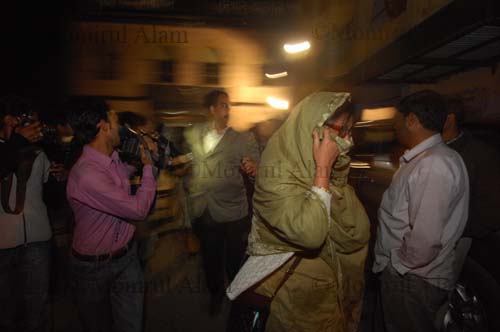
Dhaka, January 2010- Relatives arrive at Gail for last visit - Copy Right-Monirul Alam
Dhaka, January 2010- The hangman arrive at Dhaka Central Gail from Kashimpur Gail in the night - Copy Right-Monirul Alam
Dhaka, January 2010- Media and Security and curious people in front of Jail Gate - Copy Right-Monirul Alam
Dhaka, January 2010- Sudden Times Street light is closing down - Copy Right-Monirul Alam
Dhaka, January 2010- Ambulances carrying the bodies of the executed five leave for their village home - Copy Right-Monirul Alam
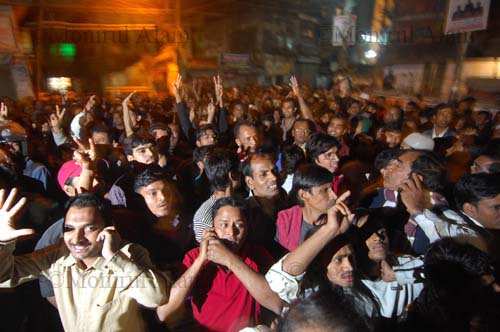
Dhaka, January 2010- People shown the victory sign as the news of execution spreads. - Copy Right-Monirul Alam